Case study: how a Sitiawan seafood processor passed its first major buyer audit with a custom batch-traceability system
A 60-person Sitiawan seafood processor was weeks away from losing a major retail-buyer audit. We didn't sell them a traceability SaaS — we built them a small batch-tracking system in 9 weeks. Here's what it did.
This is a case study. For the category-level guide — when custom is the right call, what it really costs in 2026, and how to choose a build partner without getting burned — see Custom software for Malaysian SMEs: the honest 2026 guide.
The business
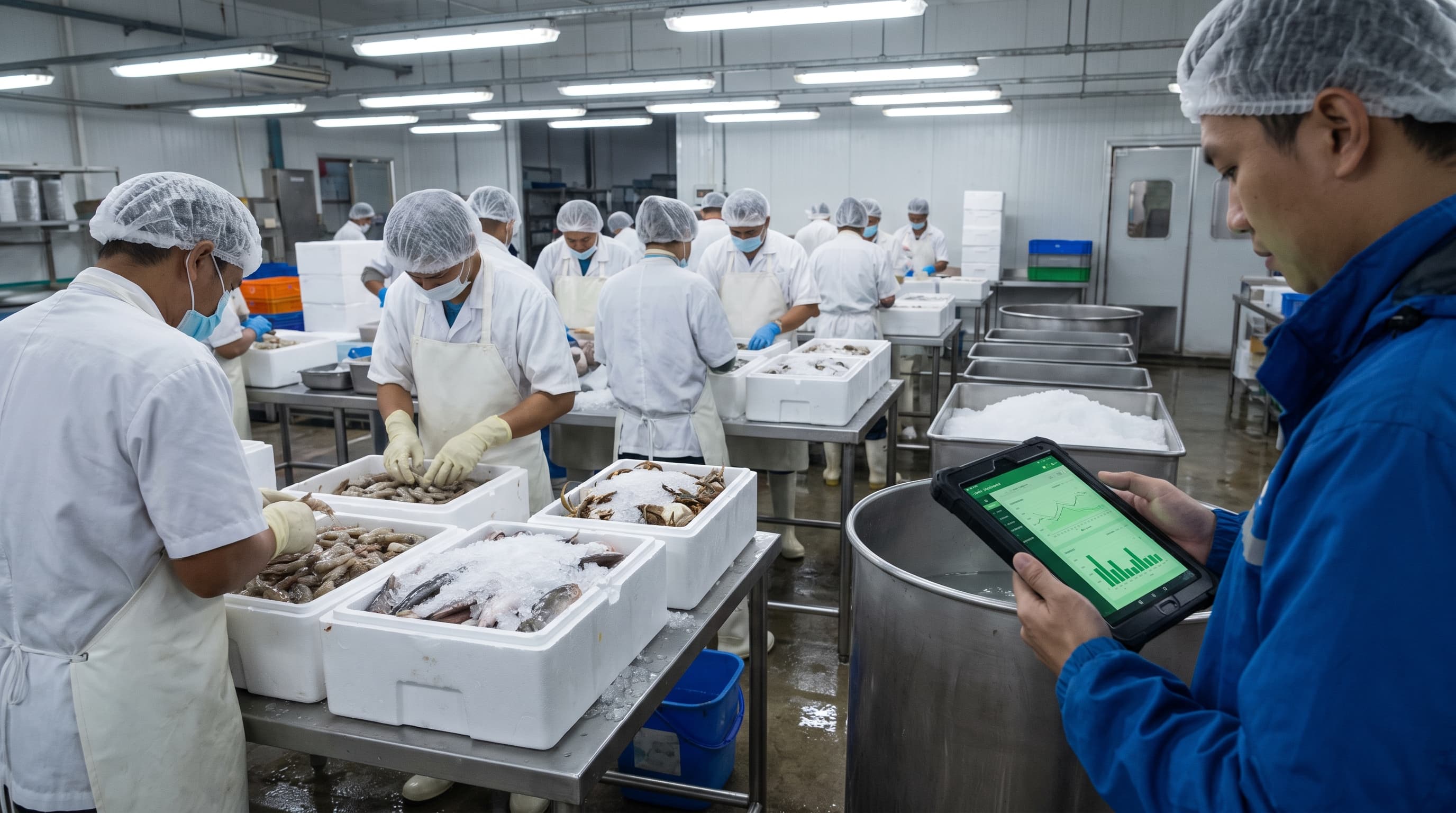
A 60-person seafood processor in Sitiawan, Perak. Family-run, opened in 2008. Sources from local fishermen along the Sitiawan-Manjung coast, processes and packs frozen seafood (prawns, fish fillets, crab) for sale to a regional retail chain and a handful of food-service distributors. A 4,500 sq ft processing floor, three blast freezers, and a small QA team.
This is the case study for the custom software side of what we do — a small, opinionated build for a Perak seafood processor that did not need a traceability SaaS, did not need a six-month implementation, and definitely did not need a transformation programme. It needed to pass a buyer audit in 9 weeks.
The problem they were actually trying to solve
A major retail-buyer audit scheduled in 11 weeks — and the processor's traceability story was held together with paper. Every batch was tracked on a printed batch card that moved with the product through the floor. The cards got wet, got lost, got mis-filed. When the QA team had to reconstruct a batch's history for a customer complaint, it took 4 to 6 hours of digging through filing cabinets.
The buyer — a regional retail chain with their own food-safety requirements — had given the processor a 12-week window to either demonstrate traceability or lose the contract. The contract was roughly 35% of the processor's annual revenue.
The processor had tried two things in the previous 12 months:
- A traceability SaaS pitch from a Singapore vendor. The demo was slick. The quote was RM 95,000 for the first year, with a 4-month implementation timeline. The processor said no on the first call — wrong timeline, wrong price.
- An off-the-shelf batch-tracking spreadsheet template the QA team downloaded. It worked for a week, then the staff went back to paper because the template required data entry discipline the team didn't have.
What the QA manager said on the first call: "I don't need a traceability system. I need to be able to answer 'where did this prawn come from, who handled it, when was it packed' in under 60 seconds." That sentence is the brief.
What we built — and why this approach
A small custom batch-traceability system with three parts, sitting on top of the floor's existing barcode printer and the QA team's existing tablets:
- A batch creation flow at receiving. When a lot of raw seafood comes in from a fisherman, the QA staff scans the fisherman's QR code (we helped the processor issue QR codes to their top 30 suppliers), enters the species, weight, and landing date, and the system creates a batch ID. The batch ID is printed as a barcode label that travels with the product through the floor.
- A stage-tracking flow at each processing step. Receiving → Heading & gutting → Grading → Blast freezing → Packing → Cold storage → Dispatch. At each step, the operator scans the batch barcode and confirms the action. The system logs the operator, the timestamp, the temperature reading from the nearest freezer sensor, and any notes.
- A traceability query that QA can run from a tablet. Enter a finished-product lot number, get the full chain — who supplied the raw, when it was received, every operator who handled it, every temperature reading, every dispatch. Answer time: under 30 seconds.
Why not the Singapore traceability SaaS? Because the processor needs to answer buyer audits, not run a global supply-chain platform. The SaaS would have been over-engineered for a 60-person floor with 30 suppliers, and the 4-month timeline would have lost the contract before the system went live. The build matches the floor, not the other way around. That's the architect, not coder line we keep in the call.
How the operation changed
Three concrete changes inside the first 9 weeks:
- The paper batch cards are gone. The floor staff scan, not write. The QA team no longer digs through filing cabinets. The audit story is in the system, not in a cardboard box.
- The QA manager can answer traceability questions in under 30 seconds. A buyer auditor asks "where did finished lot 2026-04-17-P3 come from?" The QA manager scans the lot, gets the full chain, reads it out. The auditor nods.
- The floor staff actually use it. The single biggest risk. We made the scan flow take 4 to 6 seconds per batch step, with the tablet mounted at waist height at each station. The staff use it because it's faster than writing on a card, not because they're forced to.
The build is now in the second phase — a small buyer-portal view that lets the retail chain's QA team query the processor's batch history directly (read-only), so the processor doesn't have to email batch reports on request. That's a business automation layer on top of the custom software base.
The numbers, two months post-audit in
We don't do client testimonials. We do numbers. The processor's view, two months after the audit they passed:
- Audit result: PASSED. The retail chain extended the contract for another 24 months. Roughly RM 1.4 million in annual revenue retained. The build paid for itself in the first audit cycle, many times over.
- Traceability query time: 4-6 hours → under 30 seconds. A 99% reduction. The QA manager no longer dreads buyer queries.
- Floor staff scan compliance: 100% by week 6. The 4-6 second scan time was the unlock. Below 10 seconds, compliance drops. Above 10 seconds, compliance drops. We sized the UX around that window.
- Paper batch card cost: ~RM 1,200/month → RM 0. A small saving, but the floor is also less cluttered and the QA team has more time for actual QA work.
- Buyer query response time: 1-2 days → same day. The retail chain's QA team now gets same-day answers. The processor is a preferred supplier, not a tolerated one.
Total first-phase cost: RM 32,000 to RM 68,000, spread across 9 weeks. The barcode hardware is RM 6,500 (3 industrial scanners, 1 label printer); the rest is the system build, the supplier QR onboarding, the integration with the existing freezer sensors, and the 90-day post-handover review.
Payback: 3 weeks. The first month of contract retention alone covered the entire program cost.
What it would cost for your business
We don't publish a price sheet, because the price depends on what you're running. Three honest bands for a Perak or Kedah food processor:
- RM 25,000 – RM 50,000 (one-off). A first-phase batch-traceability system for a 20 to 80-person Sitiawan, Taiping or Sungai Petani food processor with 3 to 8 processing stages, 10 to 50 suppliers, and an existing QA team. Includes hardware, system build, supplier onboarding, and 90 days of post-handover tuning.
- RM 50,000 – RM 110,000 (one-off). A multi-line build for an 80 to 200-person processor with 8+ processing stages, 50+ suppliers, multiple cold-storage zones, and a small data team to own the system long-term.
- RM 110,000 – RM 220,000 (one-off) + RM 3,000 – RM 6,000 / month retainer. A multi-site processor with 200+ staff, multiple plants, retailer-buyer portal access, and ongoing compliance reporting. Closer to a small ERP slice.
These are the same bands we use for the Perak services page and the Kedah services page.
What this looks like for your business
If you run a 20 to 200-person food processor in Sitiawan, Taiping, Lumut, Cameron Highlands or anywhere in Perak, and your traceability story is held together with paper — this kind of build is the right first move. We don't sell a traceability SaaS. We build the smallest batch-tracking system that lets your QA team answer a buyer auditor in under 60 seconds.
The next step is a one-hour call, no slide deck. You tell us your processing stages, your supplier count, your audit timeline. We tell you whether a custom traceability build is the right answer, or whether the real fix is a paper process with better discipline. We won't pitch you either way. Get in touch and we'll set up the call.
If your bottleneck is on the production-line maintenance side rather than the QA side, our Taiping food manufacturer case study shows the AI maintenance build for a Perak plant. And if your bottleneck is in the F&B front-of-house, our Ipoh F&B case study shows the AI front-desk build for an F&B group.
E-invoice readiness. For the cheapest compliance paths, the LHDN mandate in plain language, and the 3-month countdown playbook, see E-invoice readiness for Malaysian SMEs.
About the author
The pitchdeck.my team
I run pitchdeck.my — fifteen years building custom software, automation, and AI tooling for Malaysian SMEs, from Alor Setar family businesses to KL fintech desks. Most weeks I’m scoping a new build, writing the spec, and shipping the first version with the founder.
- AI for SMEs
- Custom software
- Malaysian markets
- Business automation
Related builds
Get custom software in Perak
Frequently asked questions
The first phase for the Sitiawan processor was 9 weeks from kickoff to live, including 2 weeks of supplier QR onboarding. A single-line first-phase build can land in 6 to 8 weeks. Multi-line builds with buyer-portal access and ongoing compliance reporting take 3 to 5 months for the first two phases.
No. It removes the boring, paper-chasing half of their job. The QA team handles the actual QA work — temperature checks, supplier verification, audit response. The system logs the data so the QA team doesn't have to.
The top 30 suppliers in this case adopted QR codes in 2 weeks because the processor is their biggest customer. For smaller suppliers, the system supports manual entry — the QA staff enters the supplier ID at receiving. It's slower but it works.
The system stores the full batch chain in a flexible format. We map the chain to the buyer's required format (typically CSV or PDF) at query time. If your buyer uses a specific portal, we integrate with it.
Tell us what you run.
We’ll spec the fix in a week.
Priced like a hire, not a project — around the cost of one admin a month. Most builds pay back in 30 days or less.
Get a build specMore for Perak
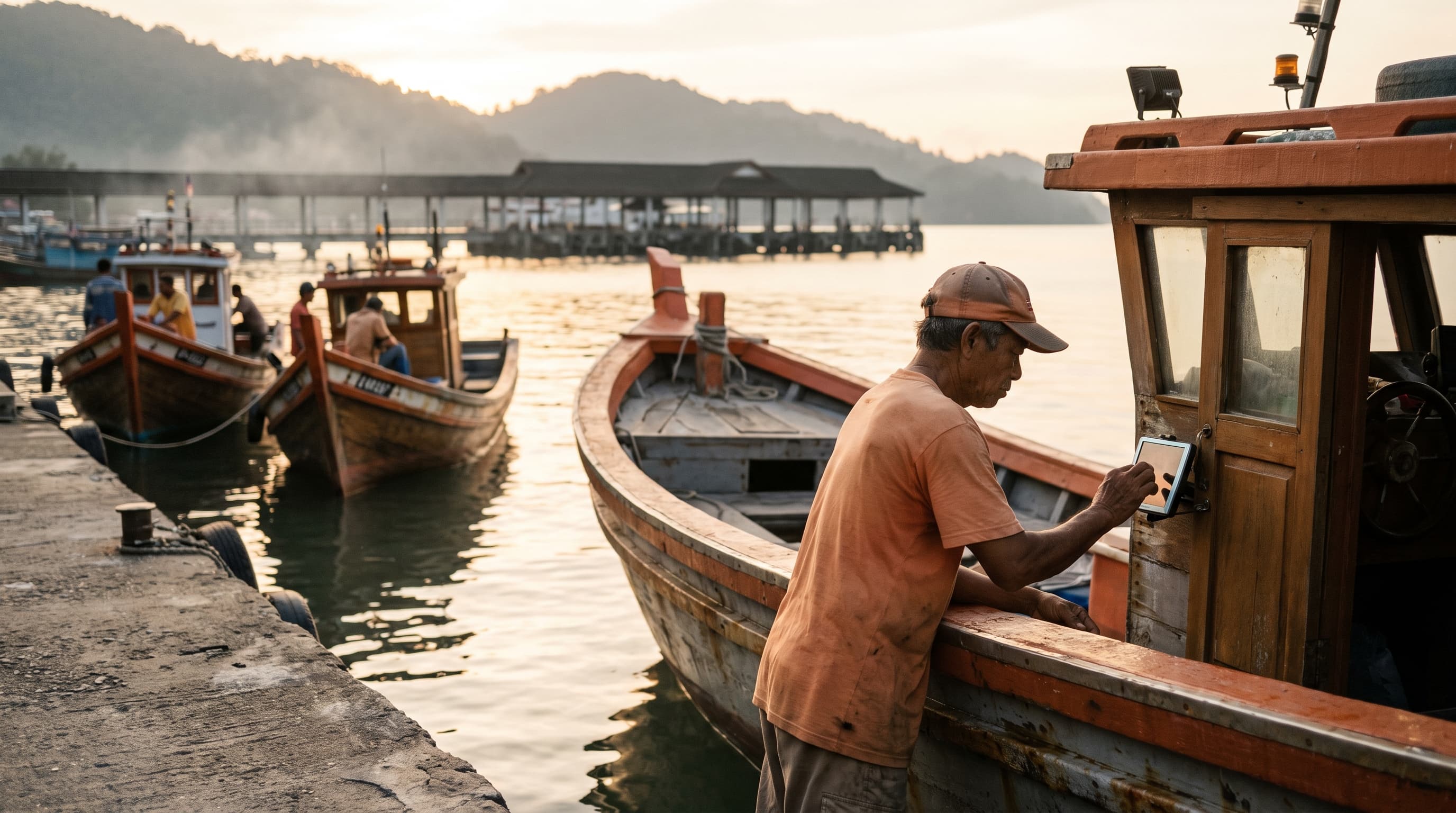
Case study: how a Sitiawan fishing cooperative cut fleet fuel costs by 8% with a thin custom tracking app
A 22-boat Sitiawan fishing cooperative was burning RM 38,000 a month on diesel. We didn't sell them fleet AI. We built them a simple live-tracking app. Six months in, fuel is down 8% and boat utilisation is up 14%.
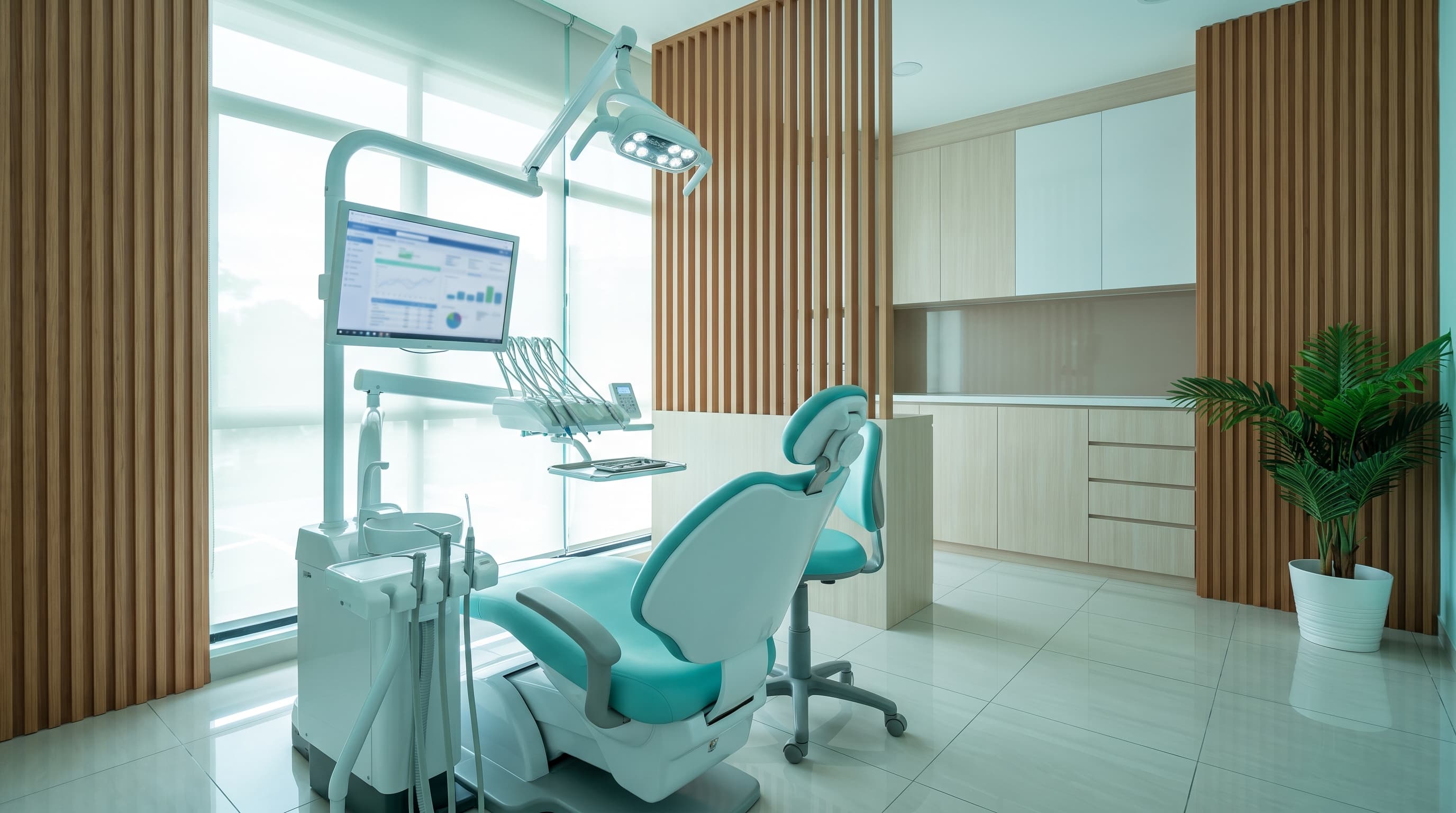
Case study: how an Ipoh dental clinic group cut no-shows from 22% to 6% with a custom patient-communication system
A 14-year Ipoh dental clinic group was losing 22% of booked slots to no-shows. We built a custom WhatsApp-first patient-communication system. By week 8, no-shows were 6%. The full build, the cost, the real numbers.