Case study: how a Perak rubber estate office tracked yield and tapper labour across three estates
A Perak rubber estate office tracked yield and tapper labour on paper across three estates. We built a custom tracker. Over-tapping fell from 8.3% of panel-days to 0.9%.
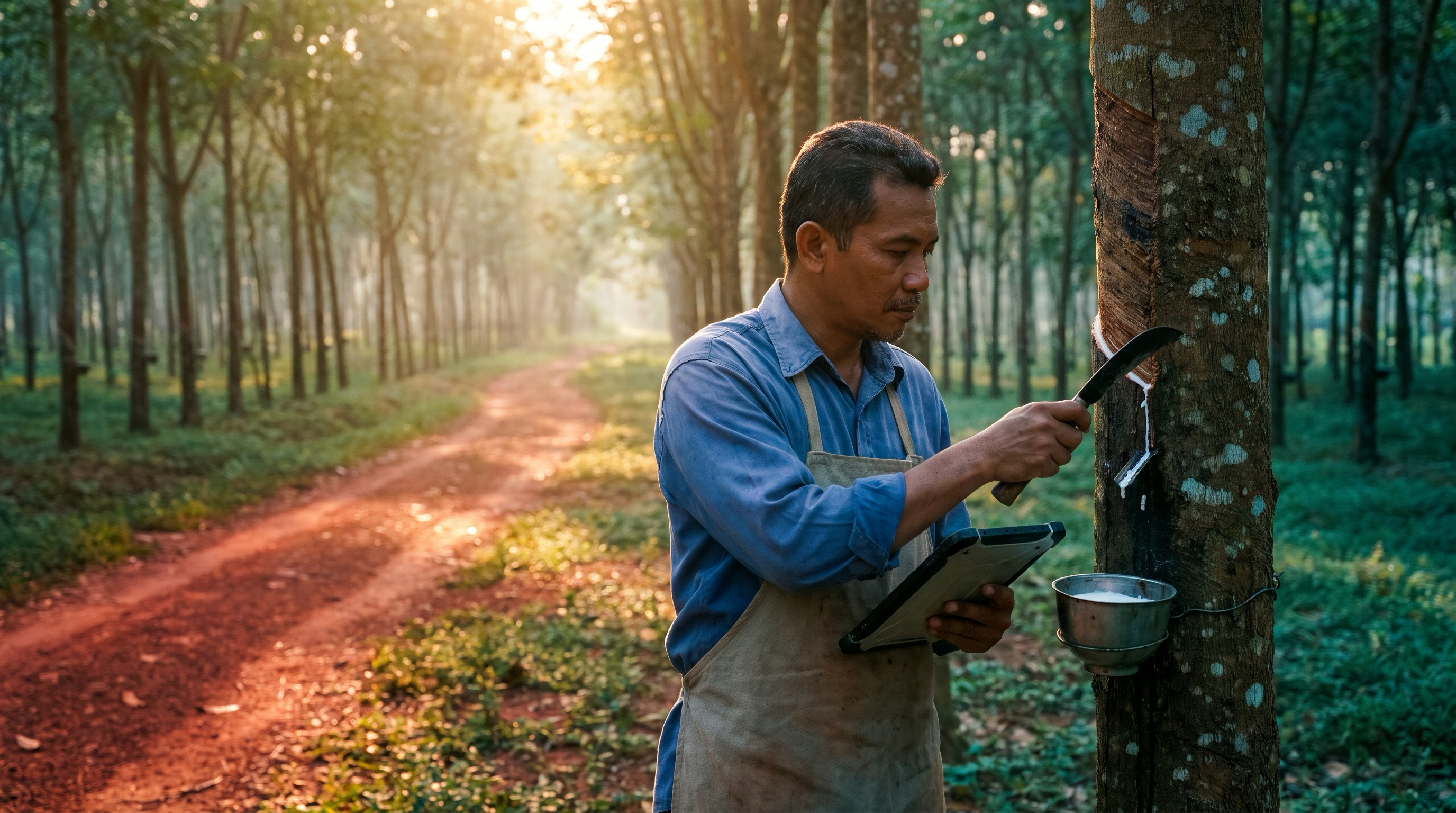
A three-estate rubber management office in the Kampar and Batang Padang country west of Ipoh, Perak — the Kluang office — with 620 hectares of tapped rubber, 68 tapped blocks, 142 tappers and a four-person office. They had never run a rubber estate management system. Every tapping record came back on paper, got keyed into a spreadsheet by the clerk, and was three weeks out of date by the time the manager opened it. We built them a custom yield and tapper-labour tracker.
The business
A family-held rubber group, third generation, that took over three run-down estates between 2009 and 2016: one flat on the Batang Padang irrigation scheme, one hilly outside Kampar, one older holding in Perak Tengah. They run 620 hectares across 68 blocks, 142 tappers and a four-person office, turning about 480 tonnes of dry rubber a year — 40 tonnes a month, sold as RSS 2 and RSS 3.
Supervisors muster the tappers at half past five, and each tapper cuts a panel — a half-spiral cut on alternate days, the 1/2S frequency Standard Malaysian Rubber runs on. Cup lump goes into the tanks by midday, sheets are graded RSS 1 through RSS 5, a dealer collects weekly.
Perak is an unusual place to do this: eleven formal rubber estates and 716 hectares of estate-tapped land, against twenty-eight estates and 9,592 hectares in Kedah and Perlis, while smallholders produce 89.4% of Malaysia's natural rubber. The Peninsula's oldest rubber tree stands at Kuala Gula.
The problem they were actually trying to solve
Field books came back weekly. The clerk keyed them into Excel. The estate manager read the spreadsheet at month-end, when the crop was already at the dealer. By the time anyone knew a block was running 20% under what its clone and age should produce, the tapper had worked it for six weeks.
Here is what the office could never measure. On 1/2S tapping, a panel is cut one day and must rest the next. If a tapper is absent and the supervisor marks the panel as cut anyway, the tree is tapped on two consecutive days. The bark scars, the panel heals badly, and the tree's yield falls for years. Across the three estates this was happening on an estimated 8.3% of panel-days, with no record of who was cut when. We reconstructed the figure in the first fortnight from two years of paper field books.
The labour side was just as loose. One hundred and forty-two tappers paid a flat rate per tapping day, with June 2026 averaging 19 tapping days because of rain — roughly RM 165,000 a month, approved on a supervisor's word. Duplicate days and blocks claimed twice were not unusual, and nothing could be audited. Standard Malaysian Rubber 20 averaged 873.42 sen per kilogram in June 2026, up 31.4% on a year earlier, so a two per cent error in a crop ledger was no rounding error.
What the owner said on the first call: "I don't need software that tells me what a rubber tree is worth. I need to know which panel my tappers are cutting on the wrong day, because that is where my yield is disappearing."
What we built — and why this approach
This was a custom software build, and its shape came out of the estate, not a template. Three parts.
A block master. All 68 blocks with their area, clone, planting year, panel height, expected yield per hectare, and — most important — its round. The round (giliran) says which blocks are cut on which day, so the system knows when a panel should be resting. That turned "something might be wrong" into a rule.
An offline-first field app. Eight rugged tablets, one per supervisor. At the muster, the supervisor taps each tapper's ID. The app shows that tapper's blocks for the day, with yesterday's greyed out as rest — you cannot log a cut on a resting panel. In the block, the supervisor enters the cup-lump weight, the dirty percentage, and whether rain stopped tapping. It runs with no signal, queues locally, and syncs at the estate road.
An office console. Kilograms of dry rubber per panel per tapping day and per hectare per year, against the benchmark for that block's clone and age. The rest-violation list, a grade estimate from the dirt and dilution figures supervisors already recorded, the labour ledger, and a monthly CSV for the buyer.
On top of the rules engine sits a small anomaly model comparing each block against its own twelve-month history and its clone-age benchmark, ranking the blocks worth walking this week. It decides nothing about tapping. It tells the estate manager where to go.
Why built rather than bought: off-the-shelf estate software assumes large, GPS-mapped, permanently connected estates and keeps your data in someone else's cloud. A hardware dealer's package was RM 45,000 plus RM 18,000 a year in support; a KL software house quoted RM 180,000 and six months. This is the Perak custom-software work we do: study the business, spec the fix, let AI build it.
How the operation changed
The muster used to be a roll call and a clipboard. Now the tablet prints the day's blocks for every tapper, with the rest panels locked out. One supervisor said what changed his week: "I used to spend half an hour remembering who had which block. Now I read it." Field time per round dropped from about three hours to one hour forty-five.
Every Monday the estate manager opens the console and gets a list: blocks with a rest violation, yield drifting below benchmark, duplicate labour claims. The crop report to the buyer is now an export, not nine days of re-keying.
The labour disputes stopped. Three to five claims a month used to go round in circles for a week. With timestamped block-level records the estate manager resolves them on a phone call. It is 0 to 1 a month now.
One more thing is coming. The state's plantation ministry is rolling out puncture tapping — tapping-by-drilling, which collects latex through a closed channel so it can be harvested in the rain — in the clusters with the worst tapper shortages, and Perak is named among them. The block master carries a tapping-method flag, so switching is configuration, not a rebuild.
The numbers, four months in
- Unexplained crop reconciliation gap: 4.1% → 0.6%. Nobody could tell a field-record error from the weight loss between cup lump and coagulated sheet, so the gap against the buyer's monthly weighment never closed below 3 to 5%. The system models that conversion. We leave it out of the payback — it is a measurement, not a recovered invoice.
- Rest violations: an estimated 8.3% of panel-days → 0.9%. The first figure was reconstructed from two years of paper field books in the build's first fortnight. The second is measured live.
- Panel yield on corrected blocks: +6.8%. From 1.42 kg of dry rubber per panel per tapping day to 1.52 kg, on the blocks where rest violations were fixed. Same clone, same trees, same tapping frequency — the change is in the days the panel was left alone.
- Duplicate and unclaimed labour claims: 3 to 5 a month → 0 to 1, worth about RM 3,600 a month in tapping wages recovered, out of RM 165,000 a month of tapping wages.
- RSS 4 and RSS 5 share of the crop: 26% → 14%. More of the crop now leaves the estate as RSS 2 and RSS 3, because supervisors weigh and grade at the block instead of only counting. Worth about RM 4,100 a month.
- Yield recovered from corrected rest violations: about RM 6,100 a month — 1.9% of monthly crop at RM 8.20 per kilogram.
- Office consolidation time: 9 days a month → 2 days.
- Total programme cost: RM 61,000, covering the build, eight rugged tablets and 12 months of hosting, across a 16-week build. Payback: 18 weeks — on yield, grade and labour, not on headcount. You cannot cut tappers; they are the labour supply. After the first year it runs at RM 650 a month.
What it would cost for your business
- One estate, under 300 hectares, under 40 blocks — RM 18,000 to RM 32,000. A single block master, the offline field app on two or three tablets, the yield roll-up and the labour ledger. For a group that only needs to know which panels are being over-tapped and to stop double-paying tapping days.
- Two to four estates, 300 to 900 hectares, 40 to 120 blocks — RM 45,000 to RM 85,000. The full build we did here: multi-estate block master, shared tapper and supervisor roster, per-block benchmark comparison, the grade model, buyer-ready CSV and monthly crop reconciliation. Add RM 650 to RM 1,400 a month for hosting and SIMs — the band the Kluang office fell into.
- Above 900 hectares, estates running puncture tapping, or a management office combining estate land with several hundred smallholder plots — RM 95,000 to RM 180,000. Multi-tenant, per-block tapping-method configuration, the anomaly model, smallholder plot management, and integration with a buying station. The layer above this is where automation earns its own line item.
For context on where these numbers sit, our honest 2026 pricing guide for custom software work lays out the band logic.
What this looks like for your business
If you run rubber — an estate, a management office, or a group of smallholder plots you administer — the pattern is the same across Malaysia. Your production data is born in the field, on paper, and lost twice on the way to the buyer: once when it gets keyed in, and once when rain stops the tapping.
The custom route makes sense if you want to own the data, if the estate's real problem is field discipline rather than a missing report, and if you would rather fix a two-percentage-point leak in the ledger than buy a licence per hectare. If your blocks are large and connected, the hosted-platform route is fine and we will say so on the call. We have also built the thin alternative for a Perak fleet — the Sitiawan cooperative's fuel and position tracker — and the Taiping auto-parts dispatcher that cut order-to-dispatch time to 35 minutes.
If this looks like your shape of problem — 1/2S or 1/3S tapping, panels you cannot prove were rested, tapping wages you cannot audit, a clerk re-keying field books every month — get in touch. We will spend 30 minutes on a call working out whether a custom build, a thin automation, or a vendor recommendation is right for you.
About the author
The pitchdeck.my team
I run pitchdeck.my — fifteen years building custom software, automation, and AI tooling for Malaysian SMEs, from Alor Setar family businesses to KL fintech desks. Most weeks I’m scoping a new build, writing the spec, and shipping the first version with the founder.
- AI for SMEs
- Custom software
- Malaysian markets
- Business automation
Related builds
Get custom software in Perak
Frequently asked questions
Over-tapping means a panel is cut on two consecutive days, usually when a tapper is absent and the block gets handed on. The bark scars, the panel heals badly, and the tree's yield drops for years. Only a panel-by-panel record of who was cut when catches it, which is what the field app logs. On the Kluang estate group it showed 8.3% over-tapped.
Malaysian estates average roughly 850 to 1,000 kg of dry rubber per hectare per year, and Perak estates sit at the lower end because much of the area is older trees on 1/2S. Smallholders, who produce 89.4% of Malaysia's crop, run closer to 590 kg.
RSS grades the coagulated sheet, from RSS 1 at the top to RSS 5 at the bottom, and the price gap between grades is where a lot of money is made or lost. Two things push a crop down the grades: dirt from the tapping round, and latex diluted with too much water at the cup. Both are free to fix.
Tell us what you run.
We’ll spec the fix in a week.
Priced like a hire, not a project — around the cost of one admin a month. Most builds pay back in 30 days or less.
Get a build specMore for Perak
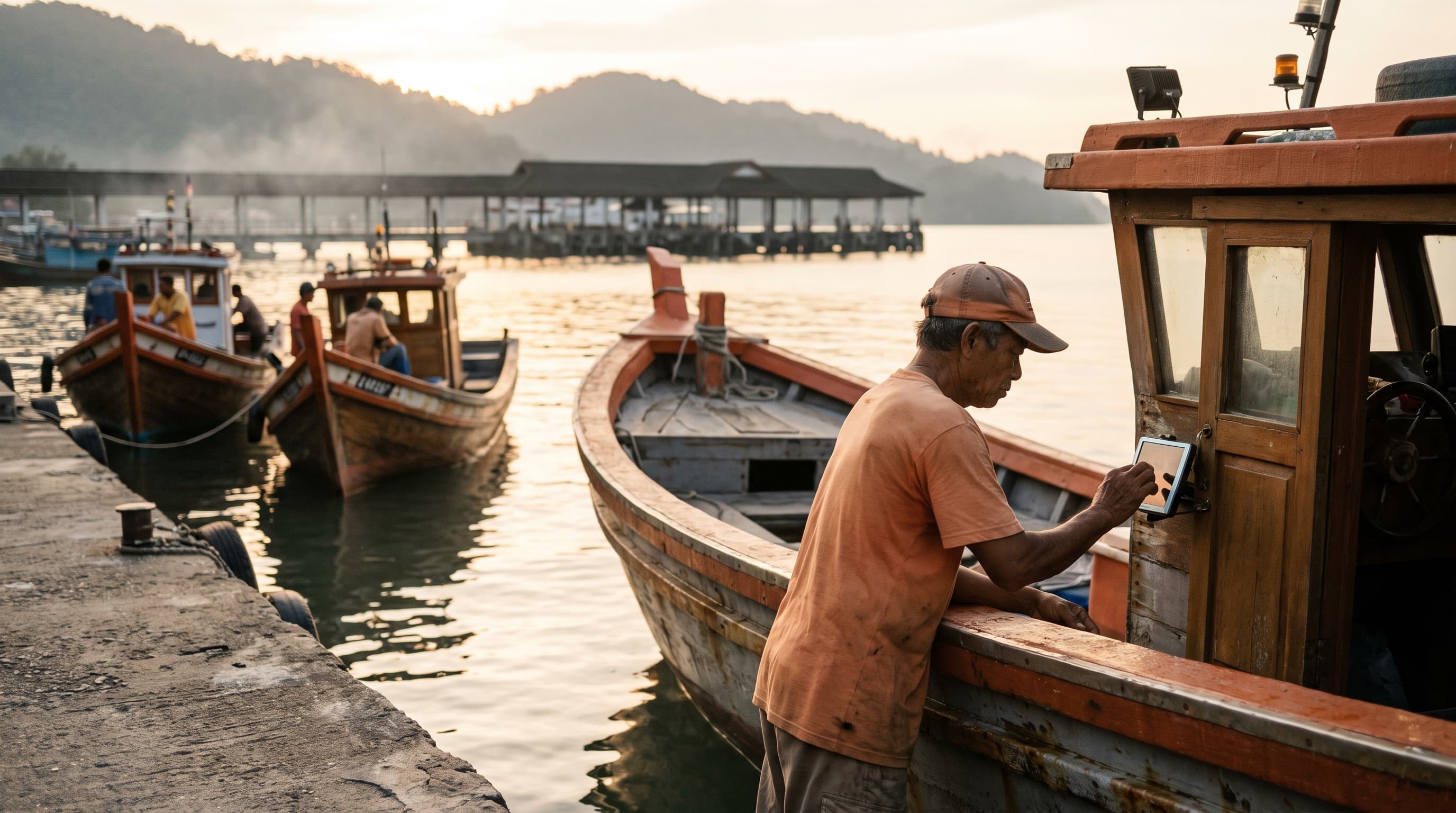
Case study: how a Sitiawan fishing cooperative cut fleet fuel costs by 8% with a thin custom tracking app
A 22-boat Sitiawan fishing cooperative was burning RM 38,000 a month on diesel. We didn't sell them fleet AI. We built them a simple live-tracking app. Six months in, fuel is down 8% and boat utilisation is up 14%.
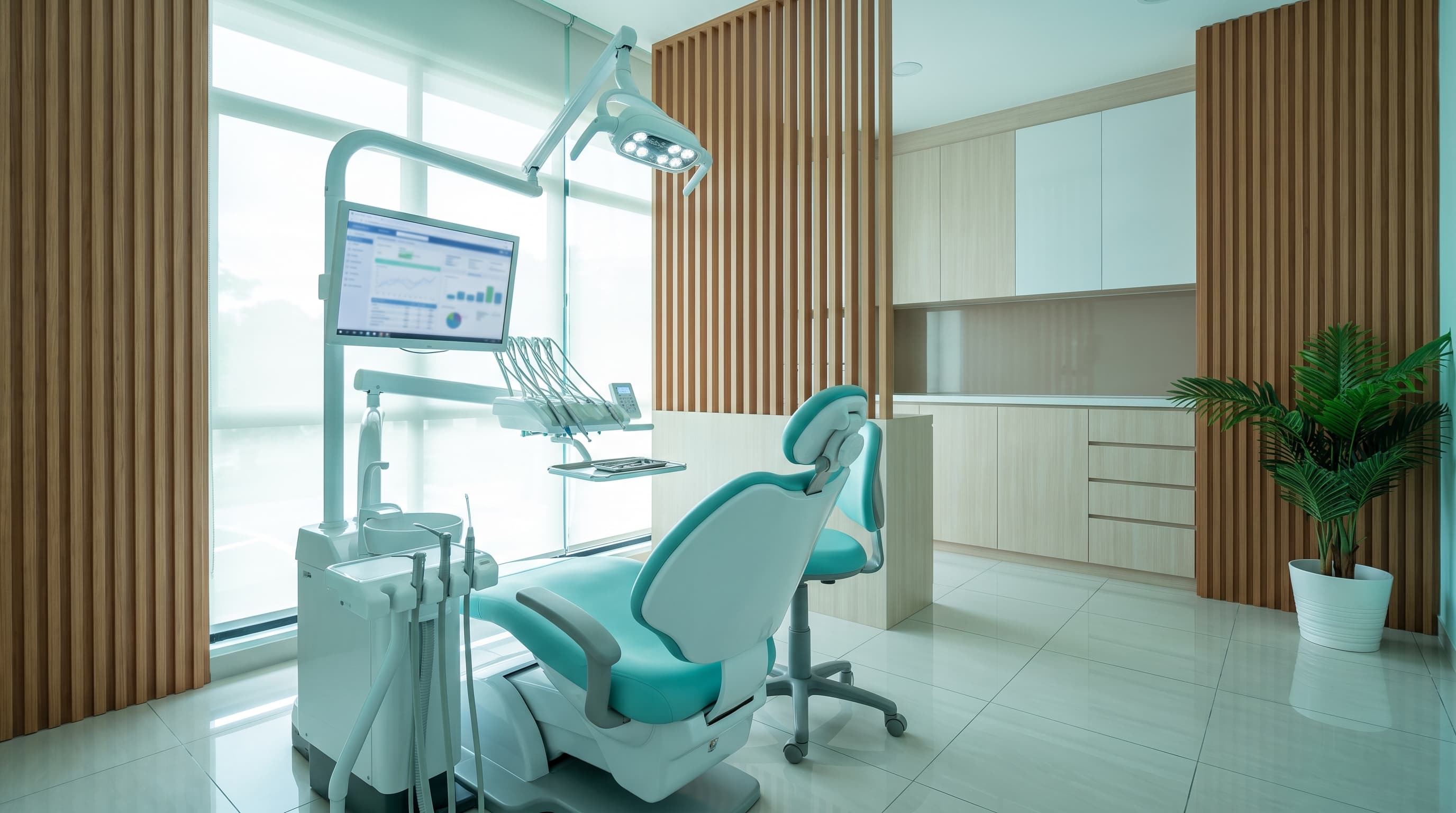
Case study: how an Ipoh dental clinic group cut no-shows from 22% to 6% with a custom patient-communication system
A 14-year Ipoh dental clinic group was losing 22% of booked slots to no-shows. We built a custom WhatsApp-first patient-communication system. By week 8, no-shows were 6%. The full build, the cost, the real numbers.