Case study: how an Alor Setar rice-mill cooperative cut off-season waste 18 points with an AI demand-forecast model
An Alor Setar rice-mill cooperative was overproducing 22% of its off-season stock and selling it at a 35% discount. We spec'd a small AI demand-forecast. Waste fell to 4% in 9 weeks.
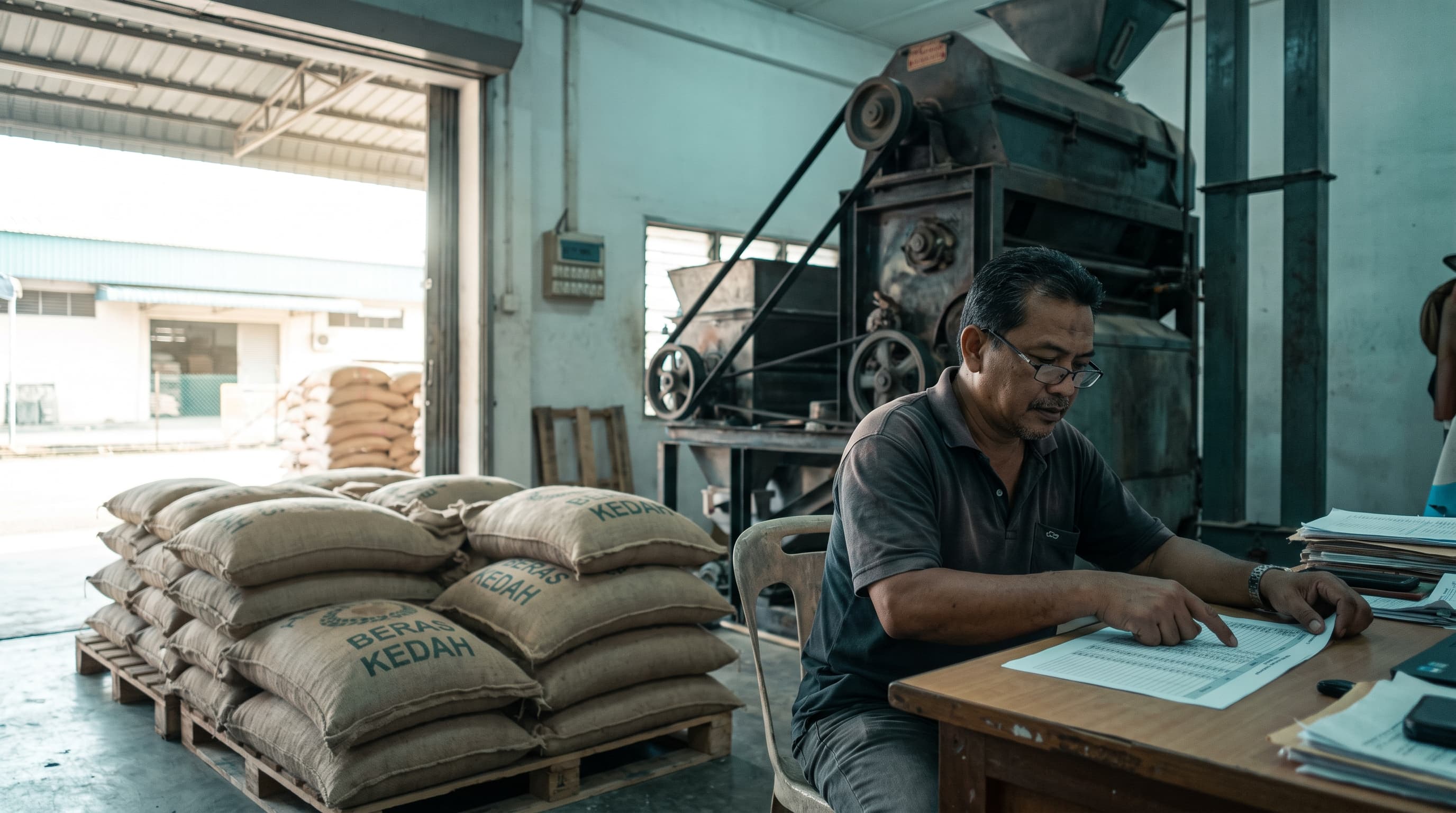
A 22-year-old rice-milling cooperative in the Alor Setar granary — inside the MADA scheme, the 96,000-hectare Kedah–Perlis paddy bowl that produces about 40% of Malaysia's rice — was overproducing 22% of its off-season output every year and dumping the excess at a 35% discount to a Penang wholesaler. Annual discount loss: about RM 486,000. The fix was a small AI demand-forecast model — not a full ERP. See the Kedah services page for the other AI builds the corridor runs.
The business
A 22-year-old rice-milling cooperative, 94 member farms across three kampung in the Alor Setar granary — Pumpong, Kepala Batas, and the road to Kuala Kedah. Two passes — a 4-tonne-per-hour de-stoner and a 2.5-tonne-per-hour polisher — finishing about 3,100 tonnes of white rice a year. Two main-season pushes (October to March, MADA musim utama) and one off-season run (April to September, musim luar). Customers split four ways: the BERNAS national tender (~28% of volume), three Penang wholesalers (~32%), Kedah sundry shops and small eateries (~25%), and farmgate sales to member families (~15%).
The mill manager — Pak Lah — has been with the cooperative 18 years. He knows the rough shape of every quarter. He just doesn't have a tool to make the off-season call more precise than "kita buat macam tahun lepas" — we do it like last year.
The problem they were actually trying to solve
Kedah's rice cycle splits into two very different seasons. Main season (musim utama) is October to March — high yield, large harvest, the BERNAS tender absorbing a fixed share, the Penang wholesalers taking their usual bulk. Off-season (musim luar) is April to September — lower yield, smaller harvest, a more price-sensitive market, and the festival calendar pulling demand around (Hari Raya, Wesak, school holidays, the September monsoon dip).
Pak Lah's problem was the off-season volume. Three leaks, every year:
- The forecast was the manager's gut feel. The chairman and Pak Lah would meet in late March, look at last year's numbers, and decide how much to mill. They were routinely overpacking by 18% to 25% — milling to last year's customer asks plus a buffer, then discovering in June that two of the Penang wholesalers had shifted lines to BERNAS stock.
- The excess had to leave the godown within 8 weeks. Off-season rice is perishable — humidity, weevils, godown capacity, the next main-season harvest approaching. Anything unsold at week 8 was sold to a Penang wholesaler at a 35% discount, on a verbal agreement. The discount was the cost of being wrong.
- The discount bill was the biggest single P&L line. About RM 486,000 a year — bigger than electricity, packaging, the two operator salaries combined. The cooperative was profitable on revenue but losing 6% of annual turnover to a forecast error nobody had a tool to fix.
What the chairman said on the first call: "Pak Lah dah buat 18 tahun. Dia pandai. Tapi 'pandai' tu tak cukup untuk off-season — bulannya berubah, customer berubah, harga berubah. Kami perlukan alat yang tengok pattern tu semua sekali, bukan kepala saja." — "Pak Lah has been doing this 18 years. He's good. But 'good' isn't enough for the off-season — the months change, the customers change, the price changes. We need a tool that looks at all those patterns at once, not just his head."
What we built — and why this approach
A small AI demand-forecast model running on the cooperative's own sales, MADA's planting data, and a feed of daily Kedah rainfall. Three parts, all sized to a 94-member cooperative, not a national mill:
- A historical sales data pull from the cooperative's 7-year invoice and dispatch records — about 38,000 rows once cleaned, every row tagged with week, customer, rice grade, volume, price, channel. Cleaned by hand, with Pak Lah confirming four known structural breaks.
- A daily Kedah rainfall feed from the MADA rainfall network around Alor Setar, Pendang, and Kuala Kedah. Off-season volume correlates heavily with rainfall in the 4 weeks before milling. A festival-calendar overlay bakes in the 6 to 8 known demand spikes every year — Hari Raya, Wesak, school holidays, the August Merdeka rush, the September monsoon trough.
- A small forecasting model running on the cooperative's own laptop. It produces a 12-week forward forecast of weekly dispatch volume, by customer and rice grade, with a confidence band. The model retrains automatically every Sunday night. A weekly one-page decision view sits on top: last week's actuals, the next 12 weeks' forecast, the recommended mill rate, and a single line — "this week, mill X tonnes — not Y tonnes."
Why not a vendor solution? Two reasons. First, the off-the-shelf agri-forecast tools assume a single-crop, single-customer mill — the cooperative is 4 channels, 9 SKUs, 2 seasons, 94 member farms. Second, those tools cost RM 80,000 to RM 220,000 a year in licence fees — the cooperative's annual discount loss is RM 486,000, so the licence alone eats 16% to 45% of the problem. The custom AI approach is a 6-week spec-and-build, then a thin retainer. The same architectural logic is in our Kulim food-packaging AI vision case study for a different problem class.
The build is the named AI agency service — a 6-week spec-and-build, not a 14-month project.
How the operation changed
Three concrete changes inside the first 9 weeks:
- The Monday meeting now has a number, not a feeling. Pak Lah used to walk in with "macam tahun lepas." He now walks in with a one-page forecast, a recommended mill rate, and a confidence band. The chairman can argue with the number. They can't argue with "macam tahun lepas" the same way.
- The mid-week mill-rate adjustment is now a 5-minute conversation. The operator checks actuals against the model on Friday, and next week's mill rate is locked before the mill starts. The "panic mill" of the last 3 years has happened 0 times since.
- The Penang wholesaler conversation has changed. Pak Lah now calls the wholesalers in week 3 with a forward-12-week dispatch plan. The cooperative has moved two of the four Penang accounts from spot-order to forward-contract terms. The forward contracts sell at list price, not at 35% off.
The model is in its second phase — the chairman has asked for a similar forecast on the input side: when to expect the 94 member farms to deliver paddy, so the mill can plan its own intake. Same data, same architecture, applied to the other end of the supply chain.
The numbers, nine weeks in
We don't do client testimonials. We do numbers. The cooperative's view, nine weeks after the model went live:
- Off-season overproduction: 22% → 4% of off-season dispatch volume. An 18 percentage-point reduction. The 4% is the residual — cases where a customer pulled forward or delayed an order for reasons outside the model.
- Discounted off-season revenue: RM 486,000/year → RM 88,000/year. A RM 398,000/year saving. The build paid for itself in the first 9 weeks on discount-avoidance alone.
- Forecast accuracy (12-week forward): 64% → 88%. The share of weekly forecast weeks where the actual was inside the model's confidence band. The 12% gap is festival-shift noise.
- Mill-operator hours on the weekly dispatch plan: 6 hours/week → 1.5 hours/week. The operator spends the saved time on the 2 packaging lines and a small godown reorganisation.
- Penang wholesaler forward-contract share: 0% → 47% of off-season volume. The cooperative's two largest Penang accounts are now on forward terms, with a 92-day pricing window. List price, not 35% off.
- Total first-year program cost: RM 28,000 to RM 65,000, spread monthly at RM 2,300 to RM 5,400. The full program runs 12 months including handover, training, and the 90-day post-handover review.
Payback: 9 weeks on the conservative numbers, 6 weeks on the optimistic ones.
What it would cost for your business
We don't publish a price sheet, because the price depends on what you're running. Three honest bands for a Kedah or northern-region SME:
- RM 2,000 – RM 4,000 / month. A small first-phase build for an Alor Setar, Sungai Petani, Kulim or Langkawi SME with one real forecasting or classification problem and a 1 to 10-person team. Total program RM 24k to RM 48k over 12 months.
- RM 3,500 – RM 7,000 / month. A 2 to 3-phase build for a 20 to 100-person business that needs forecasting on more than one side of the operation (input + dispatch, demand + capacity). Total program RM 42k to RM 84k.
- RM 6,000 – RM 12,000 / month. A multi-site, multi-channel or manufacturing-light build — a 3-outlet F&B group, a 50 to 200-person factory, a regional distributor, a mill with 3+ dispatch channels. Total program RM 72k to RM 144k.
Same bands as the Kedah services page and the Perak services page. Every engagement is priced for the build, not the hours we put in.
What this looks like for your business
If you run a Kedah or Perlis cooperative, mill, distributor or factory and your forecast is the manager's gut feel, your inventory write-off is in the 6-figures, and your discount line is your biggest single P&L cost — this is the first move. We don't do "digital transformation." We do the smallest custom AI model that closes the specific forecasting leak you can name.
The next step is a one-hour call, no slide deck. You tell us what you run and what's bleeding. We tell you whether a custom AI build is the right answer, or whether a cheaper off-the-shelf tool will do. We won't pitch you either way. Get in touch and we'll set up the call.
If the pattern fits a different shape — a Penang wholesaler that wants the same forecast on the other side of the supply chain, or an Langkawi operator with a 12-week-forward demand problem — see our Langkawi tour-operator direct-booking case study and our Ipoh F&B AI agent case study. And if your bottleneck is a factory floor, our Kulim food-packaging AI vision case study shows the AI vision build that pays back in 14 weeks.
About the author
The pitchdeck.my team
I run pitchdeck.my — fifteen years building custom software, automation, and AI tooling for Malaysian SMEs, from Alor Setar family businesses to KL fintech desks. Most weeks I’m scoping a new build, writing the spec, and shipping the first version with the founder.
- AI for SMEs
- Custom software
- Malaysian markets
- Business automation
Related builds
Get ai agency in Alor Setar
Frequently asked questions
A useful target is 85% to 90% accuracy on a 12-week forward, with a confidence band the manager can read in 10 seconds. Below 80%, the manager won't trust it. Above 92%, you're overfitting — right for the past 12 months but won't survive the next structural break. The 88% the cooperative hit is the sweet spot.
3 to 5 years of clean weekly or monthly sales data, with the structural breaks flagged. A Kedah mill that has been running for 15+ years almost always has it in a paper invoice folder, an Excel sheet, or a half-built accounting system. The data prep is part of the build — we sit with the manager for 2 to 3 days and clean it together. The cooperative's 7-year dataset was 38,000 rows; the cleaning took 4 working days.
Both, but the value is asymmetric. The main season has the BERNAS tender absorbing a fixed share, so the model improves planning by 8% to 12%. The off-season has no fixed-share buffer, so the model improves planning by 18 to 22 percentage points — that's where the discount-avoidance saving comes from. Same model, different seasonality, different ROI profile.
The model retrains automatically every Sunday night. If a wholesaler drops a line, the model picks it up in 2 to 3 weeks. If a structural shift happens (a new tender, a price change), we sit with the manager for a half-day, flag the shift, and the model is recalibrated by the next Monday. It's a living tool, not a one-off report.
Tell us what you run.
We’ll spec the fix in a week.
Priced like a hire, not a project — around the cost of one admin a month. Most builds pay back in 30 days or less.
Get a build specMore for Alor Setar
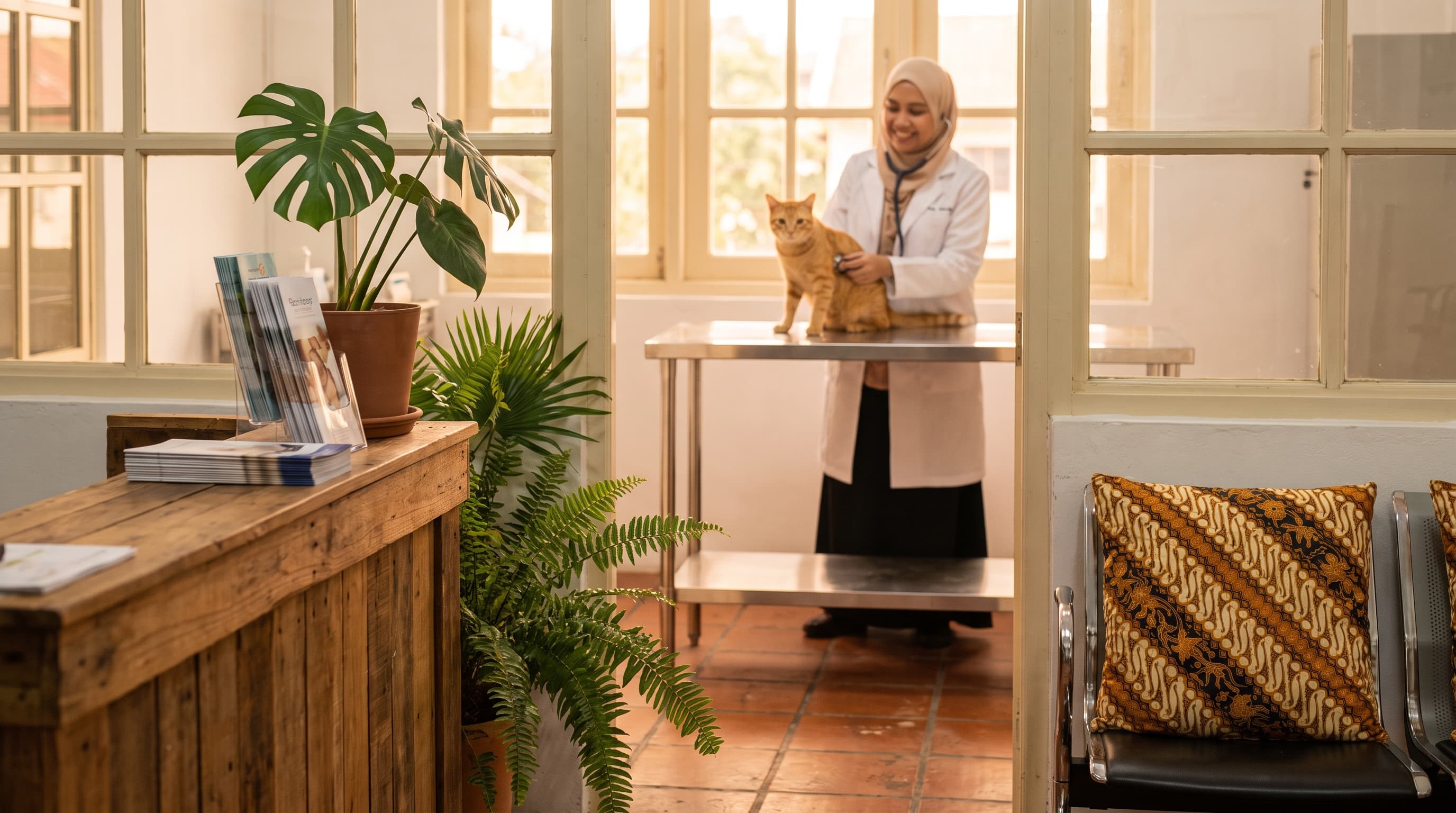
Case study: how an Alor Setar vet clinic cut 60% of phone bookings with a WhatsApp triage bot
A 3-vet Alor Setar animal clinic was losing its receptionist to phone-tag. We built an AI WhatsApp triage bot. 10 weeks in, 60% of bookings self-serve, no-shows down 22%, and the receptionist is back doing actual in-clinic care.
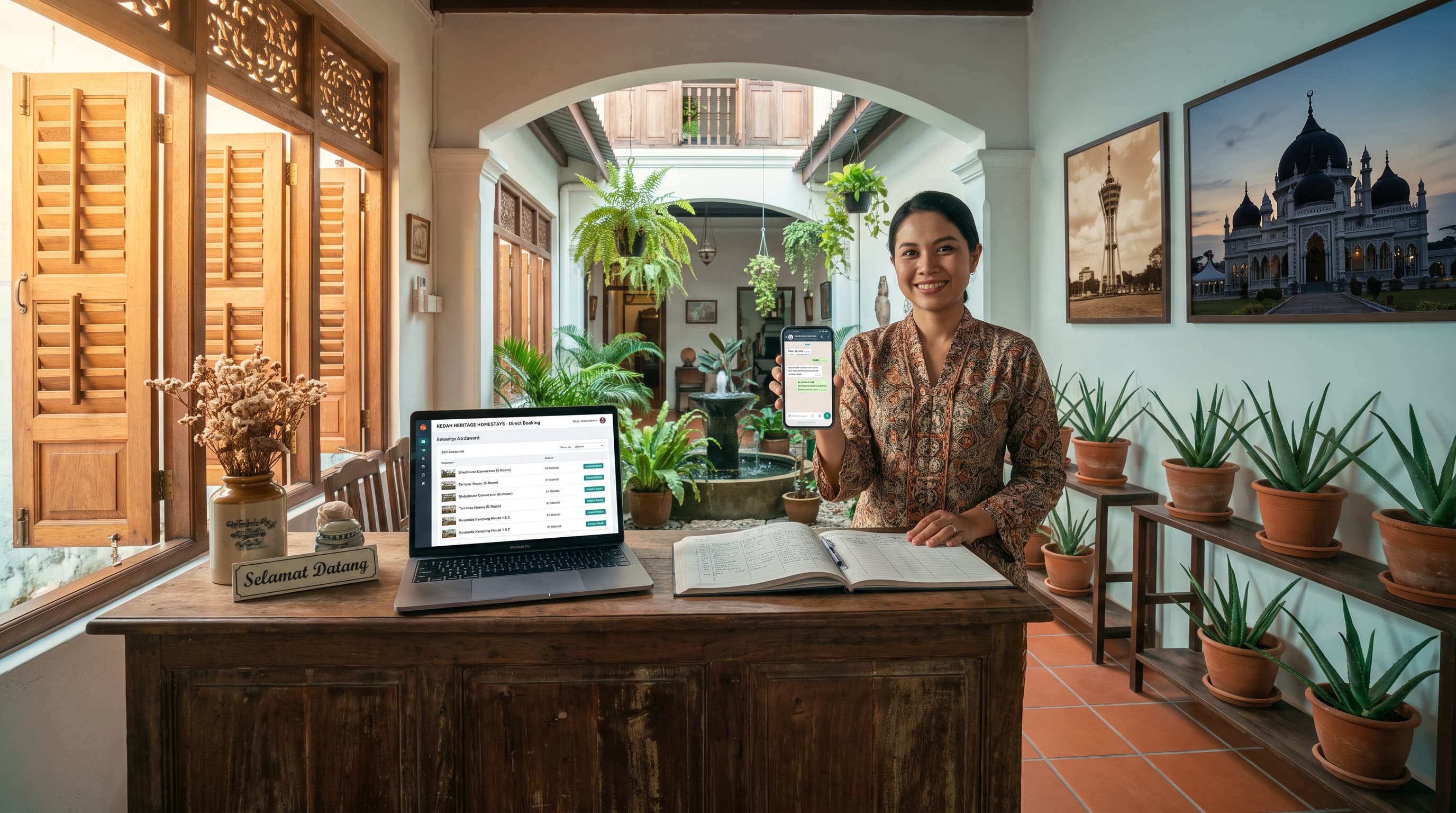
Case study: how an Alor Setar homestay network cut OTA commissions from 18% to 2% across 14 properties
A 14-property Alor Setar homestay network was paying 18% to Booking.com on every booking. A direct-booking website cut that to 2%. 9 months in, RM 168k saved annually.