Case study: how an Alor Setar printing shop cut quote turnaround from 3 days to 4 hours with document-AI
A 22-year-old Alor Setar commercial printing shop was taking 2-3 days to turn a customer PDF into a firm quote. We built a document-AI pipeline. 5 weeks in, quotes land in 4 hours and the owner has stopped losing walk-in jobs to faster competitors in Penang.
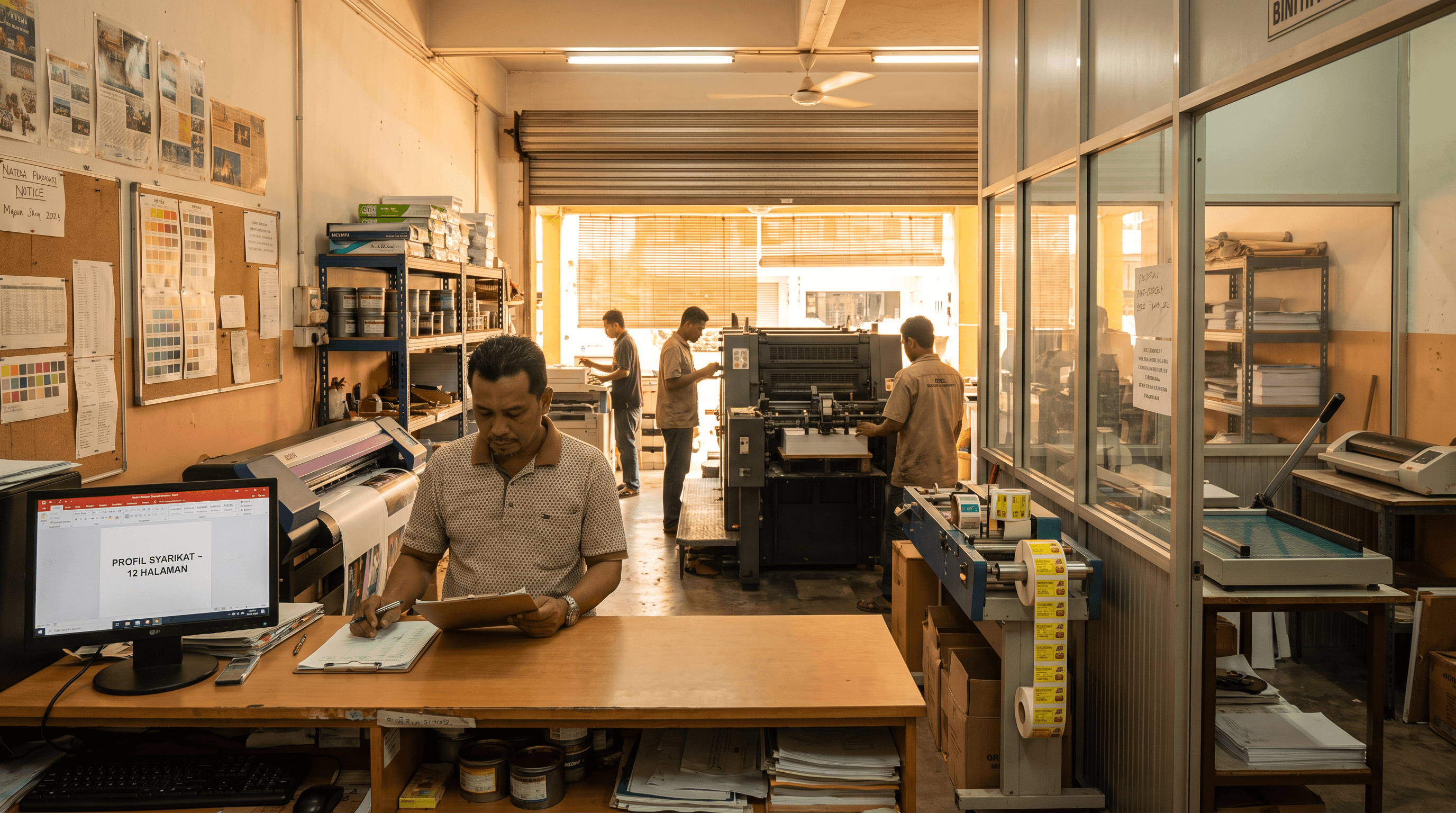
An Alor Setar commercial printing shop — print, large-format, sticker, business-card, simple packaging — had a quote turnaround problem that was getting worse every quarter, not better. Customers were walking in with a 12-page PDF, asking "how much and how fast", and walking out 3 days later with a number. By then, two of the three had already given the job to a Penang competitor who replied in 24 hours. We built a document-AI quoting pipeline. Five weeks after go-live, the same PDF comes back with a firm quote in 4 hours, and the owner is booking jobs the same week the customer walks in. This is the AI Your Business arm of pitchdeck.my in the wild: a 15-year-old software house studying a real Kedah business, specifying the fix, and letting the model do the heavy lifting.
The business
A 22-year-old family-run commercial printing shop in Alor Setar — three offset presses, two large-format printers, a sticker-and-label line, and the usual finishing room (cutting, laminating, binding). Owner is the second-generation. Four full-time staff in the front office: two on the counter, two on quote-prep. The customer base is split roughly 60/40 between Kedah (Alor Setar, Sungai Petani, the MADA granary-region offices, government-linked stationery orders) and out-of-state walk-ins / Penang referrals who used to drive up for the better price.
Day-to-day, the shop runs like most printing shops in northern Kedah — counter opens at 8:30am, the first jobs walk in before 9, and the quote-prep pair are reading PDFs, calling paper suppliers, and pricing binding options from 9 to 6. About 38% of jobs are repeat customers with predictable specs. The other 62% are net-new enquiries that need a custom quote.
The problem they were actually trying to solve
The quote turnaround was 2 to 3 days for a custom job, and that window was actively losing work. Three things were true at the same time:
- The PDF is the work. A typical enquiry is a 6 to 18-page PDF — a company profile, a product catalogue, a programme book, a tender submission. The counter staff open it, count pages, identify paper weight, check the binding style, look up the cover finish, and assemble a quote. A clean quote took 45 minutes for a routine job and 3 to 5 hours for anything with mixed paper, fold-out pages, or special finishes.
- The owner was the only person who could quote the awkward ones. Anything with a mix of A4 and A5 sections, or a saddle-stitch with a laminated cover, or a Chinese New Year red-pocket batch with a foil stamp, went upstairs to the owner. The owner was already running two offset presses, a supplier call sheet, and the bank — so quotes piled up. If the owner was on the floor, a quote could sit for 2 days before the staff even realised.
- The competitors in Penang had learned to reply in 24 hours. Two of the three main competitors in Seberang Jaya had bought cheap SaaS quote tools and were firing back numbers the next morning. Customers who walked into the Alor Setar shop with a PDF and a deadline were being asked to wait, and they were leaving.
What the owner said on the first call: "I am not slow. I am one person. I need the PDF to come back to me with a number on it, and I need that number to be right." That sentence is the brief.
What we built — and why this approach
A document-AI quoting pipeline that ingests the customer's PDF, classifies the job, and returns a first-pass quote the owner only has to sign off on. Four parts:
- A PDF intake form on the shop's existing enquiry page. The customer uploads the PDF, the page count, the desired paper (or "I don't know — please advise"), the binding style (or "I don't know — please advise"), the quantity, and the deadline. The form has plain-Malay and English labels because half the walk-in customers are running small MADA-area cooperatives that don't speak technical print terms.
- A document-AI classifier that reads the uploaded PDF and pulls out the structured facts — page count, page size mix, colour vs B&W, image coverage (estimated by page), suggested binding from the page count, suggested cover finish from the document type. The model is fine-tuned on roughly 800 of the shop's past quotes, so it knows that a "company profile" with 16 A4 pages and 60% image coverage maps to 157gsm art card cover with saddle-stitch — not perfect, but a solid first pass.
- A pricing engine that takes the structured facts and outputs a price band (low / mid / firm) using the shop's own cost cards: paper cost per ream at current supplier rates, click charge per A4 colour sheet, binding cost per unit, finishing pass-through. The engine has the shop's supplier price list baked in, refreshed weekly.
- A review queue for the owner. The AI quote lands in a small admin view with the source PDF, the extracted fields, the cost breakdown, and a confidence score. Anything above 80% confidence, the owner signs off in 2 minutes. Anything below, the staff or owner fills the gap. Either way, the customer gets a number the same day, not 3 days later.
Why not just buy a SaaS quote tool? Because the SaaS tools the competitors are using are generic — they assume a Western A4-only, no-foil, no-saddle-stitch world. A Kedah printing shop that does Chinese NewYear red pockets, MADA granary-zone annual reports, and government tender submissions in mixed paper doesn't fit the template. The build matches the shop's actual job mix, not a SaaS form's idea of a printing job. That's the architect, not the coder line we keep on the call.
The Kedah services page covers the same kind of build for other Alor Setar, Sungai Petani, and Kulim operators, and the Kedah AI agency track goes deeper on the document-AI side of what we do.
How the operation changed
Five weeks in, the day looks different. The counter staff still meet the walk-in customers, still open the PDF on the shared screen, and still ask the four questions. What changed is what happens after the customer leaves.
The PDF now goes into the intake form instead of onto the quote-prep pile. The model returns a structured job card within 8 to 12 minutes. The pricing engine returns a low / mid / firm band within 3 minutes. The whole pipeline lands in the review queue before the lunch break. The owner reviews the 80%+ confidence jobs between press runs — about 14 minutes per job, 2 to 3 minutes to read the model output, 1 minute to adjust the margin, 1 minute to send. The below-80% jobs still need human eyes, but they're a third of the volume they used to be, and the AI quote gives the human reviewer a starting point.
The two quote-prep staff didn't lose their jobs. They moved up the stack — they're now the "quote reviewer" for the 80%+ jobs, which means the owner only personally reviews the awkward ones, the foil-stamp ones, and the customer-facing price negotiation. The shop estimates it can absorb 30% more quote volume without hiring a third quote-prep pair.
The numbers, 5 weeks in
- Quote turnaround: 2-3 days → 4 hours for the 78% of jobs that fit the model's training. The remaining 22% (the awkward ones) still go to the owner, but now with an AI pre-read, so they land in 24 hours instead of 3 days.
- Walk-in conversion: 41% → 58% — the share of customers who walked in with a PDF and ended up giving the shop the job, measured over the 5 weeks vs the same 5-week window the year before.
- Quote volume: 11% up without adding headcount, because the shop is now quoting jobs it would have previously had to politely decline ("we can't turn this around in time").
- Owner time on quoting: 6.5 hours/week → 2.1 hours/week. He now spends the saved hours on the actual production floor and on a small new line of foil-stamped Kedah heritage packaging that the shop has wanted to launch for 2 years.
- Total program cost: RM 18,500 (build + 90 days of model fine-tuning + the small admin view). Payback at the current run rate: 7 weeks.
What it would cost for your business
Three honest bands, no mark-up, sized to the kind of Kedah print / packaging / document-heavy operation we'd scope against:
- Sole-trader print shop, 1-3 staff, 5-15 quotes/week — RM 9,500 to RM 14,000. A single-shop intake form + a smaller classifier trained on your own past quotes. You keep the same workflow, you just stop being the bottleneck. Payback in 8-12 weeks.
- Mid-size commercial printer, 4-12 staff, 15-50 quotes/week, mixed A4/large-format/sticker — RM 18,000 to RM 28,000. Full pipeline as above, with the supplier cost card wired in and a multi-user review queue. The band this case study sits in.
- Multi-branch print + packaging group, 12+ staff, 50+ quotes/week across Kedah and Penang — RM 35,000 to RM 60,000. Multi-branch intake, branch-specific pricing rules, integration with the existing MIS / accounting system, and a longer fine-tune cycle on your real quote history. Payback in 12-18 weeks at the group level.
For the Kedah specifics (Alor Setar, Sungai Petani, Kulim, Langkawi, the Bukit Kayu Hitam cross-border print jobs) the Kedah services page has the local references and the build lead.
What this looks like for your business
If you're a Kedah printing shop, packaging line, or any document-heavy operation that turns customer PDFs into firm prices, the pattern is the same: a small intake form, a document-AI classifier trained on your own quote history, a pricing engine with your supplier cost card, and a review queue for the awkward jobs. We don't pitch you either way — we'd rather show you the same build running in a Kedah shop, ask whether your job mix would benefit, and let you decide.
Two other case studies worth a look if you're in the same general problem space: how a Langkawi hotel concierge used an AI agent to handle after-hours enquiries, and how a Perak manufacturer used a maintenance schedule AI to stop losing jobs to unplanned downtime. Both are the same architect-first pattern in a different vertical.
If you want to talk about your shop, your job mix, and what the build would actually cost, drop us a line — we do a free 30-minute scoping call before we ever write a quote.
About the author
The pitchdeck.my team
I run pitchdeck.my — fifteen years building custom software, automation, and AI tooling for Malaysian SMEs, from Alor Setar family businesses to KL fintech desks. Most weeks I’m scoping a new build, writing the spec, and shipping the first version with the founder.
- AI for SMEs
- Custom software
- Malaysian markets
- Business automation
Related builds
Get ai agency in Kedah
Frequently asked questions
It doesn't try to. The pipeline returns a "low confidence" flag for any job type that's outside the training set, and the quote-prep staff or the owner fills the gap manually. The model is honest about what it doesn't know — the worst outcome is a flagged review, not a wrong price. Over time, as more of those jobs get reviewed, the model learns them.
Yes, and that's the part most printing shops underestimate. Paper prices move with the ringgit and the regional supplier, and if the cost card is stale, every quote drifts. The build includes a small admin view where the owner or the office manager updates the per-ream price once a week — 10 minutes, that's it.
No, and it shouldn't. The whole point is to move the quote-prep pair up the stack — from "the people who type the quote" to "the people who review the AI's quote and handle the customer negotiation." The shop in this case study kept both staff and gave them a better job. If a build is going to replace staff, we say so on the first call; this one didn't.
For a single Kedah printing shop, about 4 weeks — 1 week of intake and training-data prep, 2 weeks of build and fine-tuning, 1 week of shadow-running the AI quotes alongside the human quotes so the owner can see the model is right before it goes live. The first month is the slow part; after that, it's a weekly cost-card update.
Tell us what you run.
We’ll spec the fix in a week.
Priced like a hire, not a project — around the cost of one admin a month. Most builds pay back in 30 days or less.
Get a build specMore for Kedah
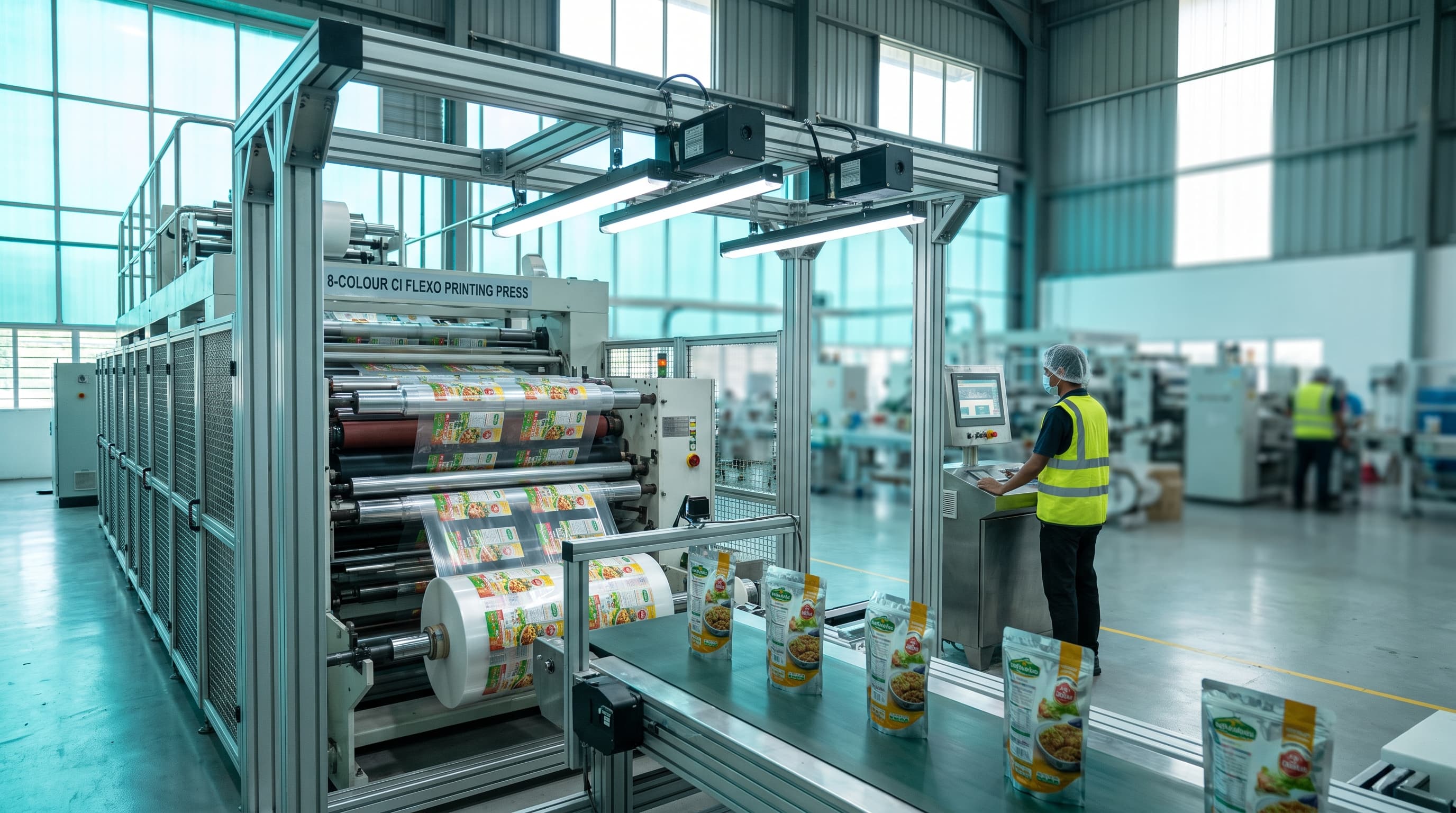
Case study: how a Kulim line cut mislabels 87% with AI vision
A 60-person Kulim Hi-Tech Park packaging line was scrapping 2% of finished output for mislabeled films. We spec'd a small AI vision checker. Scrap fell to 0.27% in 7 weeks.
How to choose an AI agency in Malaysia (without getting burned)
The 12-point checklist, the red flags, the questions to ask, and the contract clauses that protect you. Written by the agency you're hiring.