
Malaysia Will Continue Being Neutral for ASEAN Amid Trade Tensions
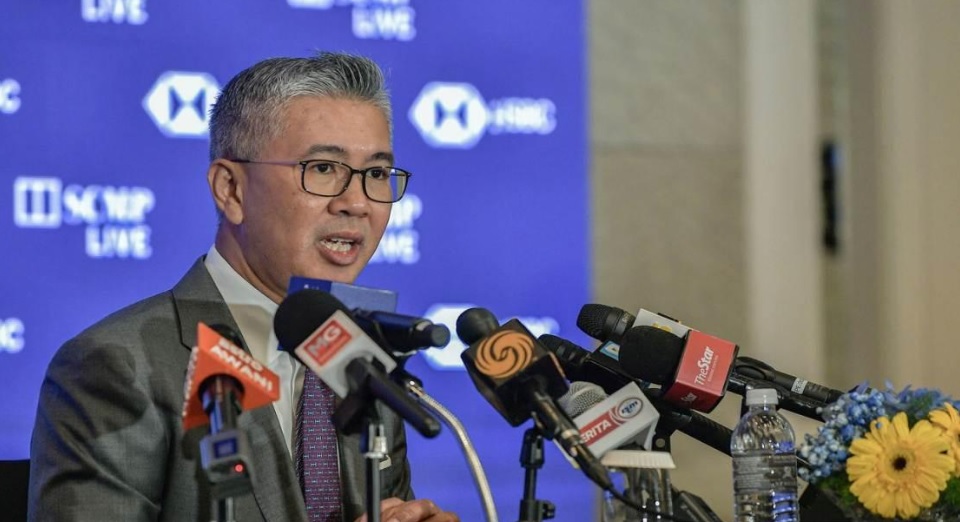
Malaysia could drive ASEAN-China synergies to achieve the Asian Century as ASEAN and Malaysia can potentially be places to be moving forward, with the latter being keen for greater connectivity with Hong Kong and Greater China as well as North Asia.
“ASEAN is a market of almost 700 million people and counting, while Hong Kong remains the gateway to China and a global financial hub. By working together, we can shape the Asian Century,” said Investment, Trade and Industry Minister Tengku Datuk Seri Zafrul Abdul Aziz, adding that Hong Kong could serve as ASEAN’s gateway to China, while Malaysia could be China’s gateway not only to ASEAN but also the rest of the world.
“Things we can do together such as fintech, the halal and shariah-compliant finance industry, semiconductors, electric vehicles, renewables energy, tourism and supply chain integrity.
“But if I could encourage your participation in anything, it’s to support women and our micro, small and medium-sized enterprises (MSME), including connecting them to their Hong Kong counterparts,” he said.
Tengku Zafrul also said that Malaysia seeks to make ASEAN Centrality a reality this year and make ASEAN indispensable not only to member states but to partners like Hong Kong.
“We heard a lot about what is attractive about ASEAN but also what is challenging. Rest assured that what Malaysia and our ASEAN colleagues will be working on – not only in 2025 through our Priority Economic Deliverables (PEDs) – but also via the 2045 ASEAN Community Vision, is to double down on the strengthens and address the challenges,” he continued, stressing that ASEAN must remain front and centre of architecture, regardless of it involving security or economics.
“There is every reason to be confident that the PEDs we have identified for our 2025 chairmanship as well as the ASEAN Community Vision 2045 – if properly executed – will be transformative for the region. Indeed, Malaysia is constantly seeking to update ASEAN to make it relevant to current, real-time challenges, including through updating ASEAN Trade in Goods Agreement (ATIGA), completing Digital Economy Framework Agreement (DEFA) and realising the ASEAN Power Grid (APG),” he added.
Furthermore, Tengku Zafrul said that the integration of ASEAN is a timely idea regardless of the current tension between Washington DC and Beijing.
“The US-China rivalry must not prevent us from building our ASEAN Community or erode our fierce neutrality because without it, our attractiveness as a region disappears,” he pointed out, noting that issues like BRICS membership should not be considered as nailing the colours to any mast but simply a natural development in nations and that no nation should dictate Malaysia’s policies.
“As long as our economic engagements with other nations bring positive spillovers and benefit our people, we will continue them,” he highlighted.
“During our ASEAN chairmanship, we have consistently upheld our position of being non-aligned and neutral. We remains committed to honouring all its trade and economic commitments with Hong Kong. As long as Hong Kong continues to provide a platform for Malaysia to engage, particularly in trade and investment, we will maintain our strong relationship,” he said.
Similarly, Tengku Zafrul said that as a bloc, ASEAN stands firm on maintaining its independence.
“We have navigated geopolitical tensions in the past – through the Cold War, the first Donald Trump administration – and even the continued policies under former US President Joe Biden, some of which have become more stringent. We have always charted our own course,” he said, adding that Malaysia remains open to global trade.
“We are actively pursuing economic engagements across various regions, including renegotiating the Malaysia-European Union Free Trade Agreement, strengthening ties with the Gulf Cooperation Council (GCC) and advancing discussions on Malaysia’s potential membership in BRICS.
“Our approach is to maintain ASEAN’s centrality and enhance intra-ASEAN trade, ensuring our economic resilience amid external pressures,” he added.

