nanoSkunkWorkX raises US$2m seed led by Tin Men Capital
Malaysian deep tech startup nanoSkunkWorkX has raised US$2 million (RM8.1m) in a seed round led by Singapore-based Tin Men Capital — its first investment in a Malaysian company.
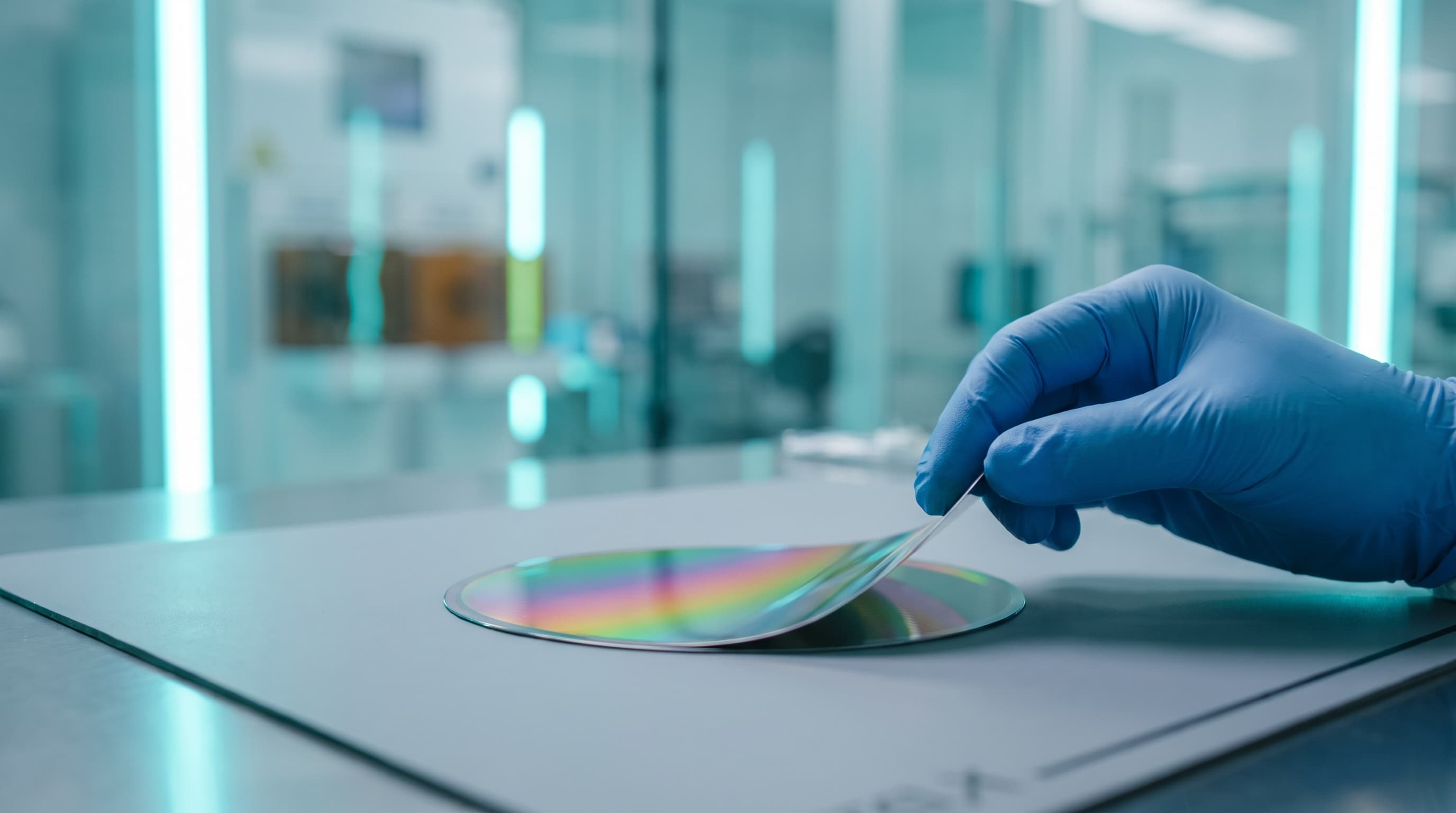
Malaysian deep tech startup nanoSkunkWorkX (nSWX) has raised US$2 million (RM8.1 million) in a seed round led by Singapore-based venture capital firm Tin Men Capital, the company announced on 2 September 2026 (The Sun Daily). The Kuala Lumpur-headquartered company engineers thin-film interfaces that improve how heat, current and electronic signals move inside advanced semiconductor packaging, with its lead product nSD-I designed to attack the AI chip packaging bottleneck. For Tin Men, the round marks its first investment in a Malaysian startup. For nSWX, the cheque is the first external capital large enough to move its interface-engineering platform into semiconductor partner qualification, scale its three product lines and fund new strategic hires across the region.
The deal
Tin Men Capital led the US$2 million round, with prior backers Gobi Dana Impak and Kumpulan Modal Perdana also participating. The raise is structured as a straight equity seed; valuation was not disclosed. nSWX had previously built its core platform, three product lines, peer-reviewed semiconductor data and first revenue on less than US$1.5 million of cumulative external pre-seed capital — a capital-efficiency profile that the founders and their backers are now flagging as central to the investment thesis. The fresh capital will be deployed across four workstreams: semiconductor partner qualification, scaling of the interface-engineering process platform, advancement of hydrogen validation and diagnostic programmes across Asia, and strategic hires across the commercial and technical teams.
The startup's lead product, nSD-I, is a graphene-copper thin-film interface designed to be inserted into existing copper interconnects inside AI chip packaging without replacing the surrounding manufacturing process. Peer-reviewed work published by the team shows the films move heat across their surface more than twice as effectively as the copper baseline, and follow-up tests have shown the material retains that performance advantage after use in pre-qualification test components. nSD-I sits alongside two sister product lines: nSD-H, which targets charge transfer and platinum-group-metal reduction in green hydrogen electrolysers, and nSD-bio, a biosensor programme being advanced under a paid joint R&D agreement with the US Navy's NAMRU Indo-Pacific unit. Co-founders Dr Amani Salim, a former NASA principal investigator, and Iqbal Shamsul, an MIT-trained computer scientist and former Morgan Stanley commodities vice-president, returned to Malaysia to build the company on the conviction that the country's materials base, manufacturing depth and sovereign appetite for deep tech could support genuine frontier hardware work.
Why this matters
For Malaysian investors, the deal is a useful data point on how regional frontier-tech capital is now flowing into Malaysian deep tech at the seed stage. Tin Men Capital's previous portfolio has been concentrated in B2B software across Southeast Asia; its move into a Malaysian semiconductor-adjacent hardware play signals that regional capital allocators are willing to underwrite longer hardware-development timelines if the underlying IP thesis is defensible. nSWX's capital-efficiency story — three product lines, peer-reviewed data and first revenue on under US$1.5 million of pre-seed — is also a useful benchmark for other Malaysian founders trying to position hardware plays for seed-stage investors who have been burned by long burns and unclear commercial pathways.
The round is also a pressure test of the public capital stack that has been built up around Malaysian semiconductors over the past 18 months. nSWX is part of the inaugural SemiconStart Malaysia cohort, led by MTDC with Silicon Catalyst UK, which is designed to give Malaysian semiconductor startups access to global packaging and qualification networks. The company's pre-seed backers include Khazanah Nasional's Dana Impak vehicle, channelled via Gobi Dana Impak, and Kumpulan Modal Perdana — both of which sit under the broader government push to use patient capital to seed Malaysian participation in the global chip value chain. Khazanah itself has an initial RM1 billion allocation under its Dana Impak mandate for strategic investments including in AI and semiconductor technologies, and Malaysia currently handles around 13% of global chip assembly, testing and packaging, ranking sixth worldwide as a semiconductor exporter. The Tin Men round is a useful signal that the early-stage portion of that pipeline is now capable of attracting regional VC capital to complement domestic patient money.
For founders and ecosystem observers more broadly, the deal answers a question that has hung over Malaysian deep tech for years: can a hardware startup with a Malaysian engineering base raise institutional seed capital without diluting the cap table into the ground before the product is qualified? nSWX's answer so far is yes, with a caveat — the round is small by global deep-tech standards, the technology is still pre-qualification, and revenue traction was the exception rather than the norm. The next 12 to 18 months, when nSD-I moves from peer-reviewed lab data to customer-qualified packaging data, will determine whether this was the start of a Malaysian deep-tech capital flywheel or a one-off.
What's next
Watch for nSWX's first public semiconductor partner qualification announcement, which the company has flagged as the next major technical milestone. Tin Men has indicated it intends to support the company through its full qualification cycle, which in advanced packaging typically runs 12 to 24 months from initial data submission. The biosensor programme with NAMRU Indo-Pacific is expected to surface initial field-deployment data before end-2026, and a Series A is plausible on a 12 to 18 month horizon if the qualification data lands as expected.
Source: The Sun Daily
Editorial by The pitchdeck.my team
Need to build or automate your company? Custom development team as low as the price of an admin — enquire now.
pitchdeck.my's AI Your Business arm is a 15-year software house. We study your business, spec the fix, and let AI build it. Priced like a hire, not a project. ROI as fast as 30 days.
More news

Vorteil Capital Targets RM4 Million on pitchIN for SME Manufacturing Solutions
Selangor-based Vorteil Capital is raising a minimum RM4 million for 25% equity on pitchIN, offering RM500 shares to build out its manufacturing advisory and supplier network for SMEs.

MIDA's New EP Rules Set RM20,000 Floor for Foreign Hires
MIDA's revised Employment Pass framework raises the Category I minimum salary to RM20,000 with hard 10-year tenure caps and mandatory succession plans reshaping how early-stage firms hire foreign staff.