
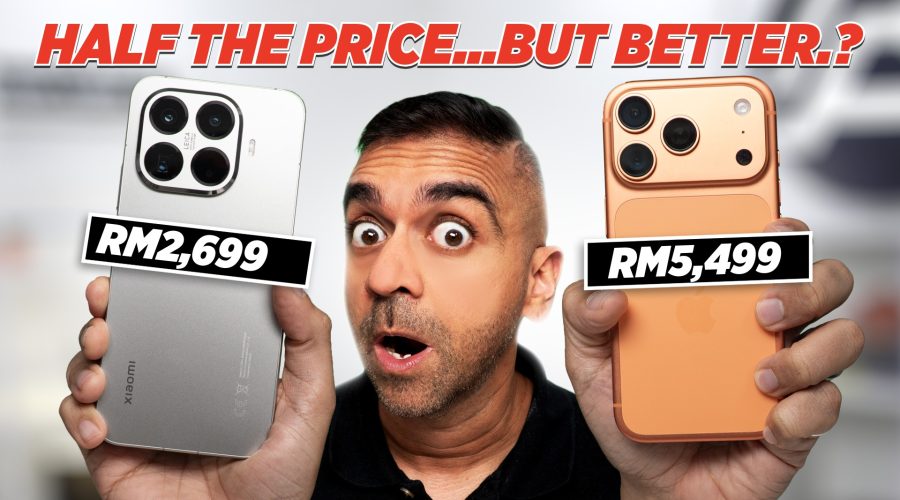
Xiaomi 15T Pro vs iPhone 17 Pro: In-Depth Camera Comparison
If you want the best smartphone camera, just go with the Pro iPhone. Well, that’s exactly what you’ve been hearing, right? But with the iPhone 17 Pro priced at RM5,499/USD1,099 and the Xiaomi 15T Pro coming in almost half of that (RM2,699/USD639), it makes you wonder: are you actually paying for better photos?

Well, in this comparison, I’ll help you find out whether or not the price gap is justified, and the results might surprise you. So, watch first and buy smart.
Specs Recap
As a recap of the spec, the Xiaomi 15T Pro comes with:


- a 50 MP f/1.6 23mm wide lens,
- a 50 MP f/3.0 115mm 5x optical periscope telephoto lens,
- a 12MP f/2.2 15mm ultra wide lens,
- with a 32 MP f/2.2 21mm wide selfie lens.
Then, as for the iPhone 17 Pro, it comes with a triple 48 MP lens:


- a 48MP f/1.8 24mm wide lens main camera,
- a 48MP f/2.8 4x optical periscope telephoto lens,
- a 48MP f/2.2 13mm ultrawide lens,
- with an 18MP f/1.9 20mm square sensor selfie lens.
So yes, this will be the only time where I’ll be talking about the specs, as the rest will be a head-to-head comparison purely on the image and the video perspective.
Ultrawide
Starting from the ultra wide, the quality and the focal length were very similar, where the only difference were the iPhone’s colors, which was a bit more warm towards the overall white balance on the first image.

But in this second image, the white balance looks a bit more true-to-life, which the Xiaomi 15T Pro did produce the exact image based on what I saw in real life.

Then, as for this third image, the iPhone 17 Pro goes back to being warmer once again, where the 15T Pro did show better color accuracy. This is of course something that you can always adjust in post or later after taking the shot. But for a point and shoot situation, the 15T Pro got it right.

Just so you know that I’ve switched to the Leica Vibrant profile on the Xiaomi 15T Pro and the Photographic Style on the iPhone is set to Default. And this was the setting throughout the comparison. So, keep that in mind.
Main/Telephoto
On the main lenses, besides the difference of the vibrancy, the dynamic range is great on both with the iPhone once again leaning towards the warmer color temperature.

But what’s interesting is that when you switch to the 2x zoom on the Xiaomi 15T Pro, the colors on it did become a bit less saturated than the main lens, but the iPhone did maintain the color consistency, switching from the 1x zoom to the 2x zoom lens. So, if you’re looking for more consistency in the saturation, but prefer a warmer image, then the iPhone would be the better option over here. But quality wise, it’s the same.

Then comparing both of the optical zoom, since the 15T Pro is at 5x zoom and the iPhone 17 Pro is at 4x zoom, I decided to compare that exact focal length on both just to be fair on the optical lenses, and the story of the color temperature is the same on the iPhone being warmer. Sharpness on both was great because of the optical quality and the periscope lens on each.

Then comparing the 10x zoom on the Xiaomi 15T Pro, which has the in sensor zoom, compared to the iPhone’s 8x zoom. Even though it’s going into the digital focal length on the Xiaomi 15T Pro, the story was the same on both: sharp, great dynamic range, and just warmer color temperature on the iPhone.

But where you start seeing the image quality drop is from the iPhone’s 30x zoom onwards, where the consistency of the quality and sharpness on the 15T Pro still look good and sharp.

Then the iPhone’s max zoom is at 40x zoom, which not only didn’t look great, but the Xiaomi 15T Pro 60x zoom still looks very decent and it can even go up to 100x zoom. But that is something that I wouldn’t recommend if you are going for quality, but still very decent as seen over here.


Even on the second round of images, the only difference you would see is the color temperature on the main lens, but everything else like the dynamic range and sharpness was on point and similar on both.

This time around the 2x zoom on the 15T Pro did some great consistency switching from the main, but throughout the focal lengths, the optical periscope 5x zoom on the 15T Pro against the 4x zoom on the iPhone was same as seen earlier, while the 10x zoom on the Xiaomi and the 8x zoom on the iPhone was also the same, and of course this is besides the color temperature of course.


Then you start seeing a drop in quality on the 30x zoom onwards on the iPhone, but keep in mind that it’s harder to really lock in the zoom on the subject when you go above this 30x zoom compared to the likes of the Xiaomi 15 Ultra or even the iPhone 17 Pro. But then again, that’s not a huge issue at all considering how low the price of the Xiaomi 15T Pro is.

Portrait Mode
As for the portrait mode, first on people, both phones smartly knew that the subject was a person even though with this kind of far distance. So I didn’t have to touch the phone to focus. So both phones knew the focal point of the image.
From a far angle without zooming in, they both looked really great. But if you really zoom in manually to the image, the edge detection was not that on point on both on certain areas, but the quality was noticeably better on the Xiaomi 15T Pro.


While the dynamic range and the details of the blurred background area or the bokeh was beautiful both at the 2x zoom portrait mode, but the edge detection on the Xiaomi 15T Pro was a bit better if you zoom in close to the bottom of his hat near to where his ear is. But yes, only if you really pixel peep.


On 4x portrait, here’s where you start to see a more warmer tone on the iPhone once again. But the optical portrait mode on both phones was the best. But if you really pixel peep, you can see that the shoulder area next to the collar is not as great, but totally fine by me.


Then I took pictures of an area which had a lot going on in the background and also someone who had a darker skin tone as well. Color-wise, the iPhone 17 Pro got his skin tones more accurate with the Xiaomi 15T Pro being less saturated on the orange collar of his, but this is another case of adjusting it in post if you really need to.


And that was the case also for the 2x zoom portrait mode or even the optical portrait mode too. And don’t worry about the bokeh that you see or the background blur because you can always adjust this after taking a picture.


Next, I took portrait mode shots on this complicated shaped flower just to see how well it did on both. And while as mentioned the background blur is something that you can adjust in post, but the Xiaomi 15T Pro got the edge detection perfectly well when you zoom in to see the edges compared to the softer edges on the iPhone 17 Pro. And the story was the same at 2x zoom.


But one thing to really keep in mind is that when you switch to the periscope lenses on each in this particular portrait mode, the iPhone always asks you to go further in the camera app in order to take the photo to get a better focus, I guess. But this only happens when you’re taking photos of objects. Probably because of the fact that the iPhone’s algorithm when it comes to portrait mode are meant for more human subjects as opposed to another type of complicated subjects. But that was not the case when nailing the shot on the Xiaomi 15T Pro.
Selfie
As for taking selfies, the 1x zoom selfie looks great on both with the iPhone being brighter. Most Android phones already had the wider selfie options. So, comparing this with the new iPhones, the iPhone’s wide selfie is definitely wider because of the new square sensor.


But when it comes to portrait selfies, while both on its own look great, but the skin contours and the contrast did look better on the iPhone. As for the Xiaomi, it still seemed to have some level of beauty mode applied to the phone, even when I turn it off on the camera app because other than that, both had very good dynamic range for the background area for this portrait selfie in the background blur for this particular portrait selfie.

Ultrawide (Night)
As for the nighttime photos, when it comes to the ultra wide shot, it looked great, but if you zoom in close to the red car in the middle, you would see a slight decrease in quality on the iPhone compared to the Xiaomi for this mixed lighting situation. So, here’s where I find it funny how a 12 MP ultra wide camera can beat a 48 MP on the iPhone.


Then the infamous lens flare that you see on the other iPhones, that is not here on the ultra wide lenses specifically for pictures. So, you won’t have any issues with that if you use these ultra wide lenses. But yes, taking ultra wide photos on both phones did look good in this particular second picture.

But what you really need to see is how well these lenses are when it comes to a more darker environment. And while this particular darker area of the photos did look great, especially for the darker areas without having any noise, but when it comes to the dynamic range and the quality of the image, when you zoom in close to the middle of the photo, once again, the Xiaomi 15T Pro did better.


And if you’re taking photos like this with a combo of lighting coming from the building, and there’s also skies over there, too, the Xiaomi 15T Pro did better handling the darker areas as seen over here.

Main/Telephoto (Night)
While we had a clear winner on the ultra wide photos at night, which was this, the iPhone finally redeems itself on the main lenses.

But the 2x zoom mode did see the 15T Pro regaining its throne with slightly better image on the “Leaf” at this signage area, and it was the case even for the woman wearing gray was sharper on the 15T Pro as well.


Then the optical lenses of 5x zoom on the Xiaomi and the 4x zoom on the iPhone look great on both, and so was the 10x zoom mode on the 15T Pro and 8x zoom on the iPhone 17 Pro. But while the 30x zoom mode at night was better on the Xiaomi compared to the iPhone, I wouldn’t recommend using anything beyond the previous zoom values.


So with that, if you’re taking photos at night, you would get great results on both if you’re going from the 1x zoom to the 8x zoom on the iPhone or 10x zoom on the Xiaomi 15T Pro.
As for a darker environment, once again, the iPhone finally becomes on par with the Xiaomi 15T Pro. Yes, I still can’t believe I’m saying that being on par with this, considering the price of the iPhone 17 Pro compared to the Xiaomi, of course. And it was the same quality for the rest of the focal length as well. But once again, it’s best to limit the zoom up to 8x zoom or even 10x zoom respectively.


Then looking at the main lens photos of the rooftop image earlier, like the ultra wide lenses, you’ll see the Xiaomi 15T Pro doing better in handling the highlights and it was more prominent on the 2x zoom mode as seen at the “Taragon” logo, more so for the optical zoom lenses at 5x zoom on the Xiaomi and 4x zoom on the iPhone.


Portrait Mode (Night)
What’s interesting is that while the daytime portrait mode look more color accurate on the iPhone as seen earlier, this time around the color accuracy on the face was better on the Xiaomi 15T Pro, specifically for the 1x zoom portrait mode, but the iPhone got the colors horribly wrong on the 2x zoom portrait mode being extremely warm, while the Xiaomi 15T Pro being very consistent throughout, even at the optical portrait mode as well.


Selfie (Night)
When it comes to night selfies though, here’s where the iPhone wins once again with brighter images for the wide selfie. But the nighttime portrait selfie on both was really good, just like the daytime selfies with the iPhone being a bit more warmer as usual. But yes, in terms of taking brighter selfies, naturally because of the new square sensor, the iPhone does better.


Video Recording
[Check out all the video footage on my YouTube video]
The Xiaomi 15T Pro can record up to 8K 30fps compared to the max 4K 120 fps on the iPhone 17 Pro. The Xiaomi 15T Pro has Log recording. So does the iPhone, which has the ProRes 422 HQ encoding and even recently the ProRes RAW on the iPhone, which needs external storage. Since this features more towards the professional people in the video or the content creation industry, I’ll just compare the regular mode on each.


Just looking at the footage on the 8K video on the Xiaomi 15T Pro. Yes, it was exceptionally nice and sharp. I still can’t believe that the amount of quality that this phone gives for the price, especially with the fact that you can also zoom in seamlessly while recording in 8K to 2x zoom, 4x zoom, and even up to a max 6x zoom. But the quality at this 6x zoom is something that you need to keep in mind because it’s not as good as the main 1x zoom lens since it’s cropping within the sensor.


But when it comes to comparing just the 4K video quality side by side for the ultra wide lenses, both looked identical and great with probably just a slight contrast difference on the darker areas, but a very tiny difference.

Then the video quality for the main lenses also was great on both with the iPhone as usual being a little warmer just like the photos as seen earlier during the day. The 2x zoom video did look tad sharper on the 15T Pro compared to the iPhone as seen in the structural part of the buildings where it did look like the Xiaomi had a little more sharper image processing done in post after taking the video and the quality on both was amazing on the periscope lenses with only a darker contrast on the iPhone.


But when it comes to stability, the iPhone’s 8x zoom mode was more stable compared to the Xiaomi’s 10x zoom mode. But while phones can go beyond that kind of zoom while video recording, I wouldn’t recommend going further.

Speaking of being stable, the ultra wide lenses on both was great, very gimbal-like, so was the 1x zoom and the 2x zoom. But when it comes to the periscope lens stabilization, the 5x zoom mode on the Xiaomi and the 4x zoom mode on the iPhone, was better on the iPhone 17 Pro.

But another area which was better was the iPhone’s front video as the dynamic range at the background of the skies were better compared to the Xiaomi 15T Pro which was overexposed on the background area but the stabilization between the both was same.

Video Recording (Night)
[Check out all the video footage on my YouTube video]
While the Xiaomi 15T Pro once again gets a higher quality on the 8K video recording at night. So I will just look into comparing the iPhone’s main lenses.

When looking at the 4K quality on the ultra wide lenses, the quality was great on both with no signs of noise on the darker areas of the footage.

And switching over to the main lenses, what’s interesting is that the iPhone’s footage was more cooler now instead of a warmer tone in this particular video footage where both the Xiaomi and the iPhone had a bit of that lens flare if you really look close.
But the lens flare was even more prominent on the 2x zoom video mode. And the iPhone’s quality starts to degrade a little from here onwards, and the overall quality and the lens flare is more obvious in the periscope lens too. So keep that in mind.


So overall when it comes to the video quality, I would say the best is to use either the ultra wide lenses or the main lenses to get the best out of both phones. And then stabilization wise the ultra wide lenses were great but even more gimbal like and great on the 1x zoom main lenses. So was the 2x zoom focal length but when it comes to the periscope lenses the stabilization was better on the Xiaomi compared to the iPhone but with some jitters to the footage.


Then when it comes to the front video recording at night, the Xiaomi 15T Pro did look overall nicer with a more true-to-life footage with a better contrast than the iPhone while being a bit more warmer as usual. Then the stabilization for the front camera was equal, but because the Xiaomi looked nicer, it did look overall better.

Conclusion
So yeah, very interesting and surprising results indeed, because while the selfie images on the iPhone were better, but when it comes to video, the Xiaomi 15T Pro did better.

At the end of the day, both are amazing cameras, but if you are after value without being short changed, the Xiaomi 15T Pro proves where you don’t need to pay flagship money to get flagship shots. So maybe the smarter upgrade isn’t always the pricier one.
Related:

