
Payment Delays Still Plague SMEs: Experian Report
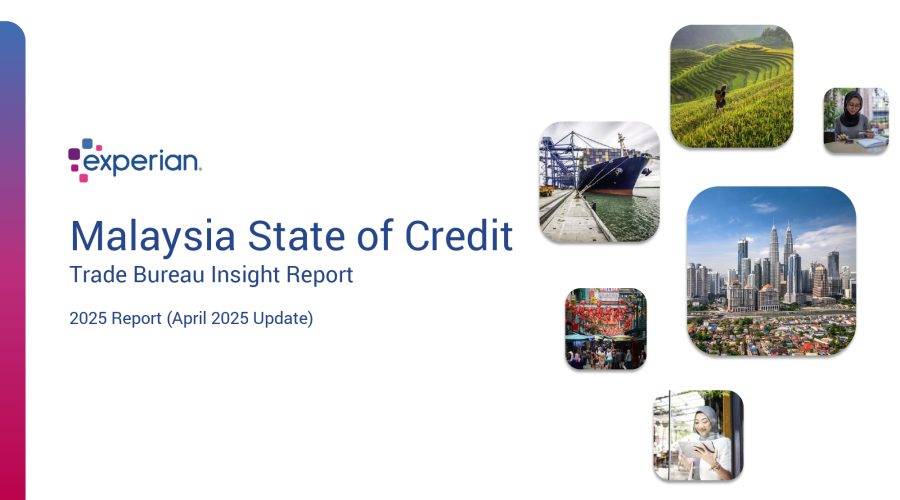
Experian Malaysia has released its State of Credit 2025 report, shedding light on emerging trends in payment behaviour and cash flow performance across Malaysian businesses. Based on proprietary Industry Debts Turned Cash (iDTC) data from the Malaysia Trade Bureau, the report examines credit repayment patterns across seven critical sectors: construction, manufacturing, services, hospitality/F&B, transport and logistics, retail, and wholesale.
The findings point to a mixed recovery landscape. While Malaysia’s economy has shown steady growth—recording a 3.6% GDP rise in 2023 and a stronger 5.1% in 2024—improvements in payment behaviour remain uneven.
The construction sector led the economic rebound with impressive growth of 14.6% in the first half of 2024 and a projected 13.7% in the second, buoyed by infrastructure projects and private investment. Meanwhile, the hospitality and F&B sectors have benefited from renewed international tourism.
This macroeconomic momentum supported a modest improvement in national payment discipline. Average payment delays across businesses decreased from 64 days to 61 days over a four-year period.
SMEs saw a slightly better gain, reducing payment delays from 69 days in 2022 to 64 days by early 2025. In contrast, large corporations held steady, averaging 58 days with only minor variation.
Despite these gains, a significant gap in payment behaviour persists between corporates and SMEs, particularly in high-pressure sectors. In Q1 2025, the payment gap was most pronounced in transport and logistics (26 days), hospitality (13 days), and wholesale (10 days).
SMEs in these sectors face compounded challenges—tight liquidity, inflationary pressures, rising operational costs, and delayed customer payments. For many, the difference of just a few days in cash flow can severely impact daily operations, stunt growth plans, and even risk business continuity.
Transport and logistics businesses, for instance, are now facing average payment delays of 76 days—up five days for corporates and four days for SMEs—largely due to subsidy reforms, surging fuel costs, and global supply chain disruptions. Construction, while currently benefitting from strong demand, also risks overheating as project costs escalate.
The report also highlights growing concern over shifting global trade policies. Recent tariff actions by key export markets could tighten liquidity across export-reliant sectors, potentially reversing current payment improvements.
Businesses may respond by adopting more conservative cash flow strategies—delaying payments to preserve working capital—which could disproportionately impact SME suppliers. If implemented by mid-2025, these trade measures are expected to slow down repayments, particularly in sectors with high export exposure.
Commenting on the report, Dawn Lai, Chief Executive Officer of Experian Information Services Malaysia, said, “This year’s data shows that Malaysian businesses are gradually adapting to global economic uncertainties.
“However, SMEs continue to bear the brunt of financial pressure. While we’re seeing some improvements in payment trends, smaller enterprises remain highly exposed to cash flow gaps.
“Without access to early credit insights and robust financial controls, the situation could worsen in 2025, leading to delayed expansion, stricter supplier terms, and higher borrowing costs.”
She added, “In today’s fast-changing business environment, Experian is committed to supporting Malaysian enterprises with advanced trended analytics tools. These solutions will help identify sustainably operated businesses and provide early visibility into those that need support to strengthen their financial resilience.”
The State of Credit 2025 report underscores the critical need for early credit risk management and smarter financial planning—particularly for SMEs navigating a volatile global landscape. For the full report, visit Experian Malaysia’s official website.

