

Media Companies Are Reshaping The Growth Narrative With Generative AI
By Serene Sia
Driven by curiosity and a sense of urgency, media companies began experimenting with generative artificial intelligence (gen AI) in 2023. By 2024, many had progressed from exploration to successfully implemented projects with measurable returns of investment, turning the AI adoption conversation for others from “if” to “when”.
This year, we will see leading publishers and media and entertainment companies adopt an “AI-first” approach rather than “AI-after”. This strategic move enables them to fully harness AI’s potential, embedding the technology deeply into their workflows and solidifying its role as a driving force for innovation, efficiency, and growth — across all aspects of their businesses.
Here are three AI trends that are reshaping the future of media and entertainment:
Multimodal AI powers interactive and accessible media experiences
Through its ability to provide a new level of creative assistance, multimodal AI is redefining our interactions with media. These gen AI models can process any input, including text, audio, images, video and music, and convert those prompts into any output type, empowering professionals and everyday users to understand, generate and modify content like never before.
Behind the scenes, newsrooms and producers are using multimodal AI to optimise content development workflows and explore new artistic avenues.
Throughout its 115-year history, South China Morning Post has accumulated millions of photos taken by its journalists. This repository grows by hundreds of photos weekly. With the publisher turning to AI to automate image tagging and classification at scale, finding and retrieving relevant images for articles is no longer time-consuming and arduous for its news editors. More effective image tagging also elevates the publisher’s search engine rankings and improves content traction across its syndication partners.
In the realm of video, Fox Sports is using gen AI to break down decades of footage, automatically identifying different types of moments, organising them, and storing them for easy access. Instead of manually sifting through a content library of more than 2.2 million videos and images, its production teams are now creating custom video content in near-real-time to delight and engage audiences, such as a highlight reel of an athlete’s top 10 sports plays during their career.

In addition, gen AI is playing an important role in enhancing accessibility. Warner Brothers Discovery’s AI captioning tool, for example, is helping its staff reduce the time taken to caption a video file by 80%. The ability to seamlessly caption, translate, and dub content, and create audio descriptions, will break down language barriers. This makes content universally available and globally monetisable.
In 2025, multimodal AI will be key in delivering interactive and inclusive media consumption experiences for all. Imagine video editing becoming intuitive and effortless when you can leverage your voice in a conversational interface along with your gestures. With narratives that evolve based on user input, content will become more dynamic and adaptable.
AI agents reimagine the entire media supply chain
AI agents will be deployed across the media supply chain, enabling content to be created in less time and at a lower cost while extracting valuable insights on content consumption for monetisation purposes.
Underpinned by data-driven decision-making capabilities, AI agents will identify workflow bottlenecks, enhance content moderation, and personalise content distribution to reach diverse audiences more effectively. Through deep analysis of audience preferences and market trends, AI agents will enable publishers and creatives to craft more timely content and tailor ad campaigns for maximum impact.
For instance, digital news and media company AsiaOne has built an agentic AI workflow that analyses articles uploaded by its journalists in real time, tags them with appropriate labels and categorises them for targeted distribution.
The precise AI-powered tagging and categorisation ensures clients’ ads are only displayed in contexts that align with their brand image and safety standards. This system also provides AsiaOne’s commercial teams with audience insights, informing their recommendations to clients on the right content angles and personalities for marketing campaigns. The integration of agentic AI has boosted the publisher’s appeal to high-value advertisers and improved its content performance by 40%.
Another example for this would be TIME Inc deploying gen AI to better connect its readers with highly pertinent content. Where data-driven insights reveal that an individual is trying to understand more about a certain topic, AI can be mobilised to serve them more content to help them dive deeper or understand a different perspective. This unlocks opportunities for the publisher to further monetise its story archives, such as offering a print edition of TIME from 1954 with a connection to the topic a reader is already interested in.
In a landscape defined by increasing competition for audience attention, AI agents will deliver a strategic advantage, driving new levels of user engagement and ad revenue growth for media companies.
Gen AI turns keywords and queries into context, transforming content discovery
In 2025, customer experiences in the media and entertainment industry will evolve from passive consumption into personalised conversations. Going beyond traditional approaches dependent on text-based keywords and structured query languages, gen AI’s semantic understanding enables it to decode a consumer’s “true intent”. It takes into account language nuances, contextual factors, and user preferences to deliver hyper-relevant responses and recommendations.
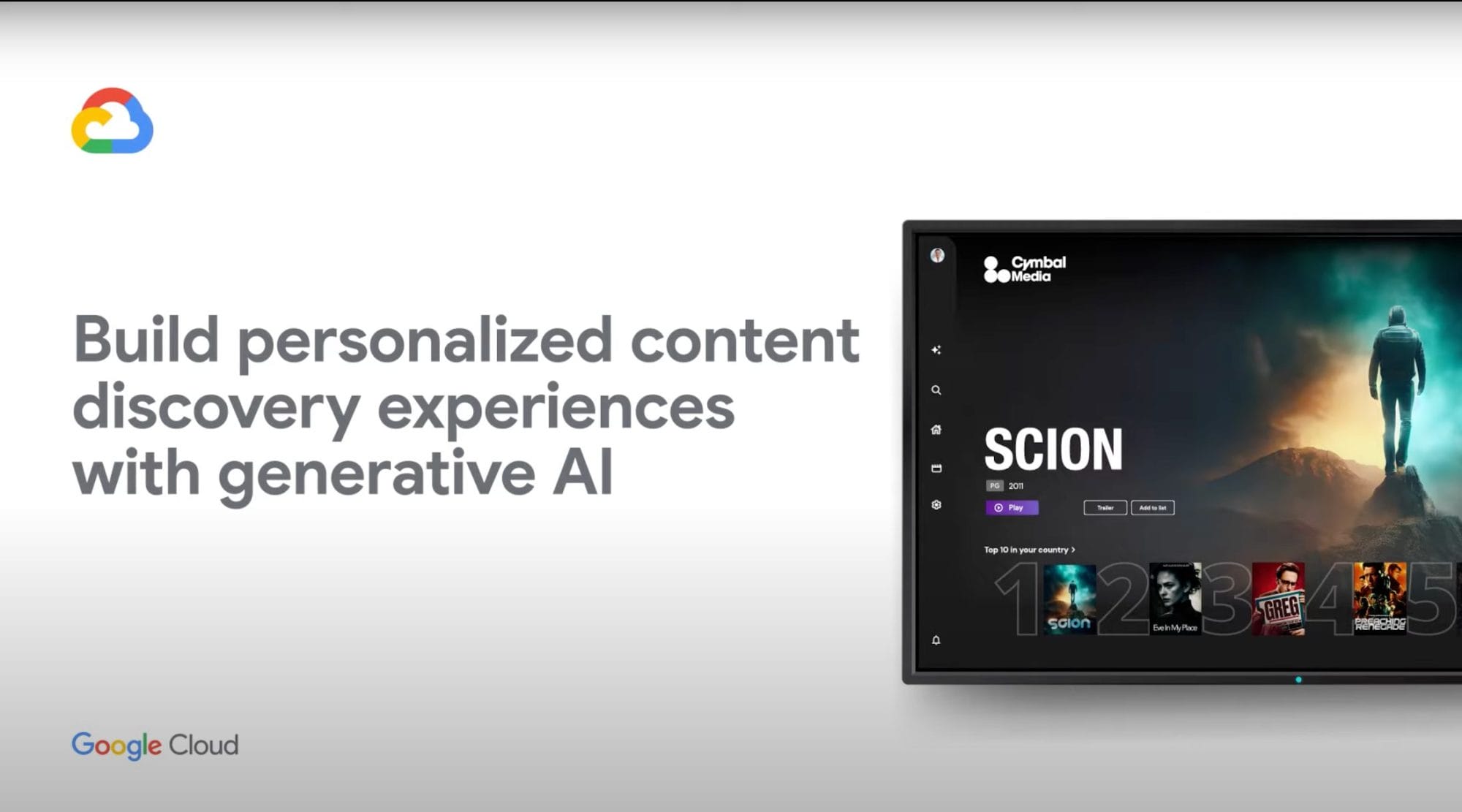
Services like Spotify and Paramount+ are already tapping gen AI to analyse audio and video content and refine content metadata, enhancing the personalised recommendations presented to users daily.
Forbes has implemented AI that combs through its content archive over the past twelve months, continuously learning and adapting to individual reader preferences. This same AI powers the website’s search and conversation tool, making content discovery easier and more intuitive for its global audience.
Going a step further, imagine gen AI-driven, intuitive search assistants being integrated into your connected TV, over-the-top streaming service or news aggregation application. These assistants would be readily available to answer technical or content-related questions in multiple languages.
A consumer can simply ask “What are good shows to watch with my family when we break fast during Ramadan?” or “What’s the latest music we can play to get into the mood for Songkran?” or “What are the most relevant financial articles over the past week based on my interests?”.
Gen AI-powered media search and recommendations will make it easier than ever for consumers to find the information they need, when they need it, and on any device. With such capabilities, companies can adapt experiences on the fly to ensure every customer interaction is seamless and leads to the discovery of meaningful and enjoyable content, thereby fostering deeper loyalty while reducing churn.
Human creativity remains at the core
From multimodal experiences and AI agents to enhanced search capabilities, AI will reshape how content is created and consumed. That said, human ingenuity remains essential. The ability to connect with audiences on an emotional level, to tell compelling stories, and to inject unique perspectives into content are qualities that AI cannot replicate.
AI adoption is about augmenting human creativity with new tools and capabilities, allowing individuals to push the boundaries of their craft and bring their visions to life in exciting new ways. This collaborative approach, where human artistry is supported and amplified by AI, will be crucial in unlocking the full potential of media and entertainment in the months to come.
The author is the Country Director for Malaysia and Singapore of Google Cloud

