
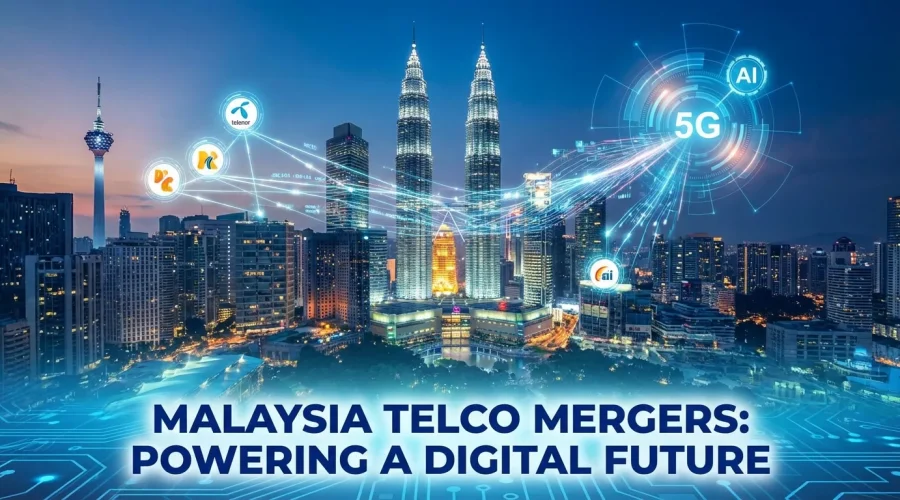
Malaysia Telco Mergers: Drivers, Impact & Opportunities
A quiet transformation is underway across Malaysia’s business landscape, one that is set to amplify the nation’s digital pulse like never before. The air is thick with strategic discussions and forward-thinking collaborations, particularly within our telecommunications sector. We are on the cusp of a significant wave of mergers and acquisitions (M&A) that promises to do more than just redraw company organigrams; it will reshape the very foundation of our digital infrastructure. This isn’t merely about corporate consolidation; it’s a calculated response to evolving technology, changing consumer demands, and the national ambition for a truly connected digital economy. In this article, we will explore the powerful forces driving this trend, the likely impact on the market, and the exciting opportunities this presents for businesses and investors across Malaysia.
The Key Drivers Fuelling Telco Consolidation
The push towards M&A in the Malaysian telco sector isn’t happening in a vacuum. It is a strategic reaction to a trio of powerful forces. Firstly, there is the undeniable influence of technological advancement. The nationwide rollout of 5G technology requires huge investment in infrastructure. For many companies, it makes more financial sense to join forces, share the cost, and build a more robust network together rather than competing separately. This collaborative approach accelerates the deployment of next-generation connectivity for everyone.
Secondly, consumer behaviour has fundamentally changed. Malaysians today demand more than just a mobile line; they seek a seamless, integrated digital lifestyle. They want one provider for their mobile data, home fibre, and perhaps even their streaming entertainment services. This demand for bundled packages is a major catalyst for M&A, as combined entities are far better positioned to offer these comprehensive, all-in-one services. A single bill and a single point of contact are powerful incentives for the modern consumer.
Anticipating the Impact of a New Market Structure
As these strategic mergers take shape, the competitive landscape of Malaysia’s telco industry will inevitably change. We will likely see a shift from a crowded field of many operators to a more consolidated market dominated by a few, larger players. This has already been demonstrated by the recent creation of CelcomDigi, a move that created a new market leader and set a precedent for future collaborations. The primary goal of such mergers is to achieve significant operational efficiency. By combining networks, streamlining retail footprints, and integrating back-office functions, companies can unlock substantial cost savings. These savings are crucial, as they can then be reinvested into network upgrades and the development of innovative new services for customers.
Beyond Connectivity: Competing in the Digital Ecosystem
The strategic rationale behind telco M&A extends far beyond building better networks. It’s about securing a stronger position in the broader digital ecosystem. In today’s world, telecommunication companies are not just competing with each other; they are also competing with global technology giants for a share of the consumer’s digital wallet. A merger provides the scale, resources, and expanded customer base needed to move beyond core connectivity services. This allows them to confidently venture into adjacent markets like digital payments, entertainment-on-demand, cloud computing, and Internet of Things (IoT) solutions for businesses. This diversification is essential for long-term growth and relevance in an increasingly digital-first world.
An Era of Opportunity for Investors and Businesses
This period of transformation represents a significant opportunity for astute investors and industry professionals. For investors, the M&A trend presents chances to identify undervalued companies that could become acquisition targets or to back the newly formed entities poised for significant growth. For businesses across all sectors, the consolidation of telcos promises more robust and reliable enterprise-grade telco solutions. A stronger, more integrated digital infrastructure is the bedrock upon which Malaysian companies can build their own digital transformation journeys, improving their competitiveness on both a local and global stage. This is a chance to witness game-changing corporate restructuring that can create powerful, future-ready companies.

This evolving landscape encourages a forward-looking mindset. As the market consolidates, the remaining players will be better capitalised and more motivated to deliver a higher standard of service. The competition will shift from price wars to a battle based on service quality, network reliability, and the strength of their digital offerings. This ultimately benefits the end consumer and the entire Malaysian economy, paving the way for a more connected and efficient future.
Conclusion: Charting a Course for a Connected Future
The trend towards mergers and acquisitions in Malaysia’s telco sector is a defining feature of our current business environment. Driven by the high costs of technology, the all-in-one demands of modern consumers, and the national drive for a superior digital backbone, this consolidation is both logical and necessary. The outcome will be a streamlined market of stronger, more efficient players capable of heavy investment in our shared digital future. For businesses and investors with a forward-looking perspective, this M&A wave is not something to watch from the sidelines. It is an active opportunity to engage with and benefit from the creation of more powerful and innovative corporate players who will deliver the next generation of telco solutions and power Malaysia’s digital ambitions for years to come.

