
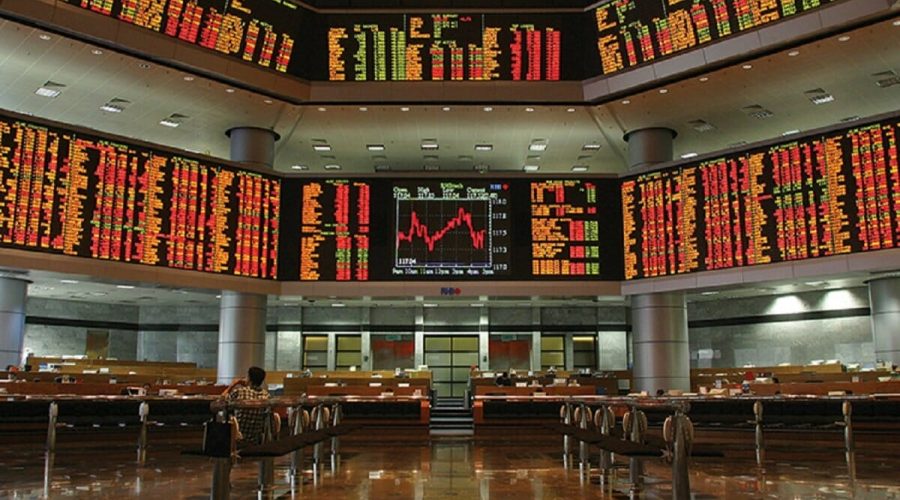
How Much More Can Foreigners Sell?
Malaysia’s equity market is trading at an undemanding forward P/E of 13.9x, near historical troughs, with foreign shareholding at 19.6% at end-Feb, only 0.2% higher than the all-time low of 19.4%. Past sell-offs led to market bottoms, when P/Es fell to
12–13x and foreign selling eased. A catalyst is needed for a rebound, potentially from easing trade tensions, a stronger MYR, improved corporate earnings, or market- boosting initiatives from the government. Given the prevailing uncertainty ahead of US decisions on reciprocal tariffs on 2 Apr, investors are expected to stay defensive.
Large foreign funds outflows drove KLCI decline
Malaysia’s equity market experienced large foreign selling from Oct 2024 to Feb 2025 (averaging RM1.7–3.1bn/month) and totalling RM13.1bn. In the first eight trading days in Mar 2024, foreign investors have net sold RM1.8bn, causing the KLCI to decline by 5.7% MTD and 9.6% YTD (both closing taken as at 12 March). Foreign investors’ ownership of Malaysian stocks declined to 19.6% as at end-Feb — just 0.2 percentage point (pp) above the all-time low of 19.4% in Jan 2025, the lowest since data became available in Jan 2007.
The sell-down is attributed to risk aversion and rising uncertainties from escalating trade wars and geopolitical uncertainties. Additionally, the 4Q24 corporate earnings season was disappointing, with some companies unable to provide earnings visibility owing to unpredictable policy changes. This report analyses current foreign fund outflows and examines past indicators of market bottoms.
History of foreign flows in Malaysia’s equity market
Foreign investors were net sellers of Malaysian equities for much of 2018–23, driving foreign shareholding down to a low of 19.5% in Oct 2023 from a peak of 24.2% in Mar 2018. Foreign flows turned positive following the launch of the Madani Economic Framework and National Energy Transition Roadmap (NETR) on 27 Jul 2023. From Jul 2023 to Sep 2024, Malaysia
recorded RM5.4bn in net foreign inflows, with investors focusing their net buys on the utilities, financial, construction, and property sectors.
However, sentiment turned negative after 27 Sep 2024, following the MYR’s appreciation to a peak of RM4.12/US$1 from RM4.62/US$1 at the start of 2024. Since then, foreign selling has intensified owing to the weakening of the MYR (to RM4.42/US$1), the US presidential election (5 Nov 2024), escalating tariff wars (20 Jan 2025), geopolitical risks, and a weak
corporate earnings season (Feb 2025). This pushed cumulative foreign equity outflows since 2010 to a new record high of RM45.6bn. For context, the YTD 2025 net foreign outflow of RM7.1bn is below the COVID-19–driven record RM24.7bn annual net sell-off by foreigners in 2020 that caused foreign shareholding to fall by 1.7 pp from 22.4% in Jan 2020 to 20.7% in
Dec 2020. However, if current foreign selling pressure persists at a similar scale and is annualised, it could match the severity of the COVID-19–induced sell-down.
Historical foreign shareholding trend in Malaysian equities
Over the past 15 years, foreign ownership in Malaysian equities has trended downward. It peaked at 27.5% in Apr 2007 before the Global Financial Crisis (GFC) and has never returned to those heights. Following Malaysia’s 14th general election (GE14) in 2018, the market recorded four consecutive years (2018–21) of net foreign selling, reducing foreign holdings to 20.4% from 23.4%. The COVID-19–driven foreign investor exodus in 2020–21 brought foreign ownership down to just 20.2% in Aug 2021. Although there was a brief respite in 1H2022, when foreigners turned net buyers (amid economic reopening and commodity
gains), lifting foreign ownership to 20.6%, the downtrend soon resumed. Foreign shareholding hit an all-time low 19.5% in Dec 2023, reflecting extremely light positioning by foreigners in Malaysia.
In terms of key events, Malaysia held GE15 on 19 Nov 2022 and six state elections on 12 Aug 2023. Foreign shareholding recovered in 2024 to peak at 20.2% in Sep 2024, as investors reacted positively to policies announced by the government like the Madani Economic Framework, NETR, and Johor-Singapore Special Economic Zone (JS- SEZ).
How low can foreign shareholding go?
Foreign investors currently hold 19.6% of the Malaysian market cap (about RM370bn) as at Feb 2025, just 0.2 pp above the all-time low. Some foreign ownership is strategic or sticky — for example, long-term stakes by multinational parent companies in local subsidiaries like Nestlé. CIMB added that its recent analysis of foreign shareholding revealed that around 28% of total foreign holdings in KLCI could be strategic, implying the remaining are free-float foreign holdings.
Based on this, the house roughly estimates that every 2% reduction in non-strategic foreign holdings could lower foreign holdings by 1 pp. However, such levels have not been observed in recent history, with the lowest recorded foreign ownership at 19.4%. We estimate every 1 pp drop in foreign ownership equates to roughly RM18bn of equity sell-down. Given that foreign ownership is already at record lows, it believes that most of the foreign fund inflows from 2024 have already exited. This suggests limited remaining foreign selling, unless a severe shock triggers outright foreign capitulation, as seen during the COVID-19 crisis, which resulted in an annual net sell-down of RM24.6bn/annum. Notably, foreign ownership of Malaysian equities has been on a structural decline since peaking in 2018.
Top foreign holdings in KLCI constituents
Companies with high foreign shareholding could underperform if foreign selling persists, but, conversely, they could rebound sharply when foreign sentiment improves (since they are liquid names foreigners would buy back). Over Oct 2024–Feb 2025, foreigners largely reduced positions in YTL Power, Sime Darby, and MISC. Among KLCI constituents, CIMB’s analysis revealed that the companies with the highest foreign shareholding (excluding foreign strategic stake) are CIMB (35.4% as at Dec 2024), Gamuda (29.8% as at Feb 2025), and Public Bank (26.7% as at Jan 2025), while 99 SpeedMart has the lowest foreign shareholding (less than 5%).
Ripe for bargain hunting given low foreign shareholding and P/E valuations
At points of extreme pessimism, Malaysian equities have traded at unusually low earnings multiples. During the 2008–09 GFC bottom, the FBM KLCI’s forward P/E fell to a low of 10x, and following the COVID-19 crash in Mar 2020, valuations plunged to a low of 14.4x. For perspective, the KLCI’s five-year average P/E is around 14.3x. Currently, the KLCI is trading at forward P/E of 13.9x, indicating an undemanding valuation.
Historically, low valuations signalled limited downside and presented opportunities for long- term investors to accumulate quality counters. In previous sell-offs, once the KLCI’s P/E fell to 12–13x (or -1 to 2 s.d. below the mean) and dividend yields rose correspondingly, bargain hunters emerged.
However, given the uncertainty surrounding US tariff policies — with an announcement expected on 2 Apr relating to “reciprocal tariffs” — CIMB said it expects investors to remain defensive and likely in risk-off mode.

