GST On Ice Until People Earns More, Says Anwar
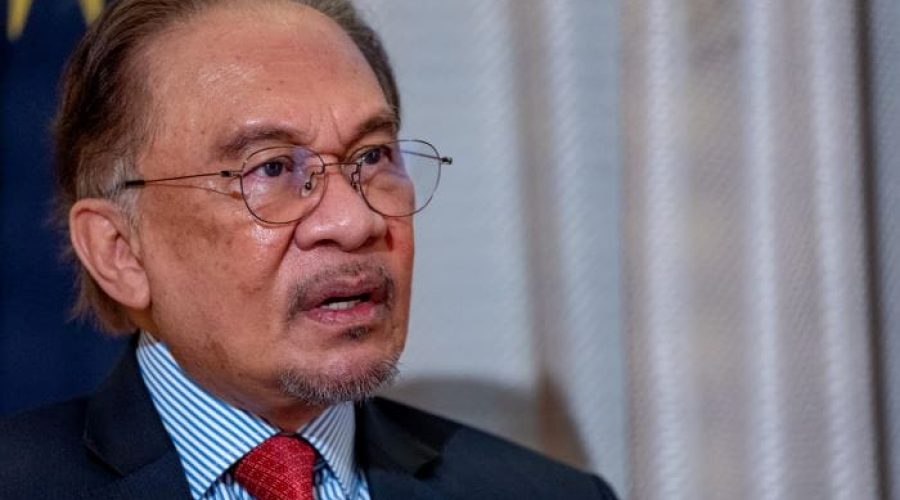
Prime Minister and Finance Minister Datuk Seri Anwar Ibrahim said the reintroduction of the Goods and Services Tax (GST) remains unsuitable for now, citing the rakyat’s low income threshold as a key concern.
Speaking during the Finance Ministry’s monthly assembly, Anwar explained that although GST is recognised as an efficient and transparent taxation mechanism, it imposes a comprehensive financial burden — particularly on low-income earners.
“We postponed (GST) because the income of the people was still too low. My opinion at the time was that people with an income of RM2,000 were still affected although we gave some exemptions,” he said.
He highlighted how even though basic necessities such as sugar and rice may be exempt, GST still applies indirectly when people purchase other goods or use public transport. “It is comprehensive,” he noted.
The government, according to Anwar, would only revisit GST implementation when the average household income reaches a more reasonable level — at least RM4,000 a month. “Let the people’s income increase first… maybe at that time we can (implement it). Right now, there are people earning RM1,700 or RM2,000,” he said.
For now, the government is focused on a more targeted Sales and Service Tax (SST) system. He said tax revenue collected through SST will be channelled into core public sectors such as education and healthcare. “The allocation for the Ministry of Education from RM58 billion in 2024 has increased to RM64 billion this year. Similarly, for the Ministry of Health, RM41 billion last year… we are adding RM4 billion to make it RM45 billion,” Anwar said.
GST was introduced on Apr 1, 2015, with a standard rate of 6%, but was later repealed on Sept 1, 2018, following widespread criticism over its impact on consumers, particularly those from lower income brackets. It was replaced with the SST system.
On 9 June, the government announced a targeted review of the Sales Tax rate and an expanded scope for the Service Tax, effective 1 July, aimed at strengthening Malaysia’s fiscal position by increasing revenue while protecting essential goods from new taxes.
Stressing the importance of macroeconomic balance, Anwar also acknowledged a gap in policy communication. He urged government members to better explain ongoing fisc