Exports of Halal Products from Malaysia Rises 15% in 2024
Malaysia’s halal product exports reached RM61.79 billion in 2024, marking a 15% increase from RM53.72 billion recorded in the same period of 2023, further maintaining the country’s top position in the Global Economy Indicator rankings for 10 consecutive years.
“The country’s strength lies in Islamic finance, halal food as well as media and recreation. The halal industry constitutes a significant portion of Malaysia’s gross domestic product (GDP), with projections estimating a 10.8% contribution (RM231 billion) by 2030 – primarily driven by a robust halal ecosystem across sectors such as food, finance and travel,” said Investment, Trade and Industry Minister Tengku Datuk Seri Zafrul Aziz.
He also pointed out that the global demand for halal products is currently valued at over US$ trillion and is expected to grow to US$5 trillion by 2030, underscoring the global appeal of halal’s ethical and sustainable attributes.
“Malaysia’s leadership in this sector is a testament to our continued innovation and dedication. Among the major international halal market players are Nestlé, Allana Group, Cargill Incorporated and Fraser & Neave. Several Malaysian companies include DagangHalal Group, Prima Quality Food Industries, Kawan Food Bhd, Crescent Foods, QL Foods Sdn Bhd and Ayamas Food Corporation, that are also recognised among top players globally,” he said, during the soft launch of the 21st Malaysia International Halal Showcase (MIHAS) 2025, delivered by Deputy Secretary-General (Industry) Datuk Hanafi Sakri.
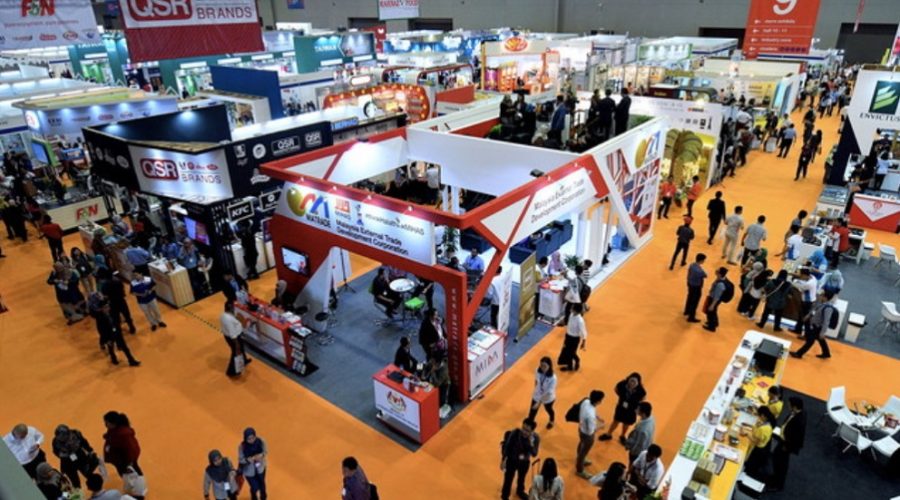
“With greater international participation anticipated, MIHAS 2025 is set to be larger and more dynamic than previous editions. It will showcase the latest halal products, services and technologies, highlighting the industry’s latest advancements,” he continued, noting that the event is scheduled to take place on 17-20 September 2025 at the Malaysia International Trade and Exhibition Centre (MITEC).
Tengku Zafrul also stated that halal-related initiatives are part of the Priority Economic Deliverables for 2025 (PEDs), particularly in the context of Malaysia’s ASEAN chairmanship.
“Malaysia is actively promoting the halal industry as a key driver of economic growth and regional cooperation. There will be a dedicated pavilion representing ASEAN’s halal industry, as well as special pavilion for companies from the Gulf Cooperation Council (GCC),” he shared.
Since its inception in 2004, MIHAS has expanded from 500 booths to 2,100 booths in its most recent edition. For the 20th edition of MIHAS, the event marked a record-breaking achievement for both the Ministry of Investment, Trade and Industry (MITI) and the Malaysia External Trade Development Corporation (MATRADE), garnering a total of RM4.3 billion in sales.
To date, MIHAS generated nearly RM30 billion in export sales and attracted 12,000 local and international halal industry players, along with over 500,000 trade visitors globally. Additionally, over 7,000 international buyers have been matched with 10,000 Malaysian companies through MIHAS’s flagship business programme, the International Sourcing Programme (INSP).
Malaysia’s Halal Industry to Expand in Emerging Markets
At the same time, the country is exploring opportunities in emerging markets, including China as part of its efforts to further expand the halal industry this year, with several strategies already outlined while also reviewing all trading partners that contribute to the industry.
“We’re also looking at those contributing to the trade deficit – especially those at the bottom of the list – to see how we can ‘zerorise’ them through what we call the ‘retain and regain’ mission.
“There are certain positions we want to retain and some we aim to regain. All of this is being managed internally,” said MATRADE chairman Datuk Seri Reezal Merican Naina Merican.
Aside from the event that is scheduled to take place in MITEC in September, MIHAS will also be held in Shanghai, China from 5-10 November 2025 as part of its strategic participation in the China International Import Expo (CIIE), which is one of Asia’s leading trade exhibitions.
“This is why we’re heading to China. CIIE is an import-focused exhibition and among global trade fairs, it uniquely allows MIHAS to coincide with it. They want to leverage MIHAS and MIHAS also seeks to leverage CIIE.
“While MIHAS typically attracts around 40,000 visitors, CIIE draws about 400,000. So, imagine the vast opportunity this presents to MIHAS participants in Shanghai,” he said.
Reezal Mericana also emphasised the immense potential of the halal industry, aligning with the Halal Industry Master Plan (HIMP) 2030, which values the global halal market at approximately US$5 trillion.
“With the global Muslim population nearing two billion, awareness around halal is growing significantly. In my discussions with Chinese counterparts, I explained that halal is not solely about Islam – it represents ‘halalan toyyiban’, which encompasses hygiene, cleanliness, safety, originality, traceability and sometimes sustainability,” he continued.
He elaborated that MATRADE has maintained its strong commitment to achieving a minimum 5% export growth towards the RM1.58 trillion target for halal exports set for this year.