
ChatGPT Translate Launches as OpenAI Takes on Google Translate
ChatGPT Translate Focuses on Tone, Context, and Real-World Use
OpenAI has quietly rolled out ChatGPT Translate, a standalone web-based translation tool meant to compete with long-standing services like Google Translate. The new platform brings one of ChatGPT’s most popular capabilities into a dedicated interface that focuses on language translation across more than 50 languages.

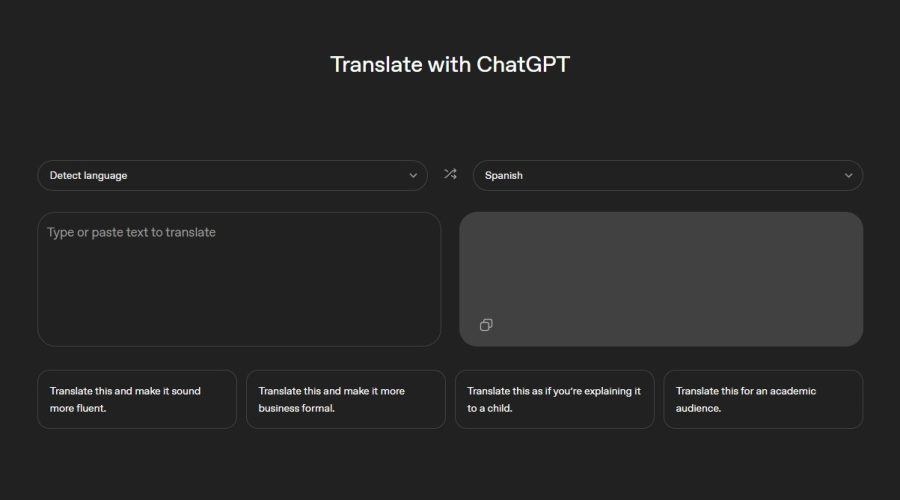
Unlike earlier iterations, where ChatGPT’s translation features lived within the broader chatbot, ChatGPT Translate offers a two-pane layout with automatic language detection for fast bidirectional text conversion. Users can paste or type text, select target languages, and receive translations in real time, similar to established web translators.
What sets ChatGPT Translate apart is the integration of contextual AI understanding and style adjustments. After translation, the tool lets users refine output with options such as making text more fluent, business-formal, child-friendly or academic. These prompts can route users back to the main ChatGPT interface with pre-filled instructions for further customisation.
The service also supports voice input on mobile browsers and hints at future support for translating images or files, although these features are still limited or not yet fully available. Currently, there’s no dedicated ChatGPT Translate app and no offline mode, meaning users must access it through a web browser.
By carving out a standalone translation tool, OpenAI is extending its reach into a core internet utility and directly challenging incumbents with its strengths in contextual nuance and tone-aware translation, even as it works to expand language coverage and feature depth.

