Wahed raises RM1.03M from 928 investors in first Malaysian property campaign
Wahed's Malaysia pilot raised RM1.028 million from 928 retail investors in six days, the first fractional property campaign under the SC's new regulatory sandbox.
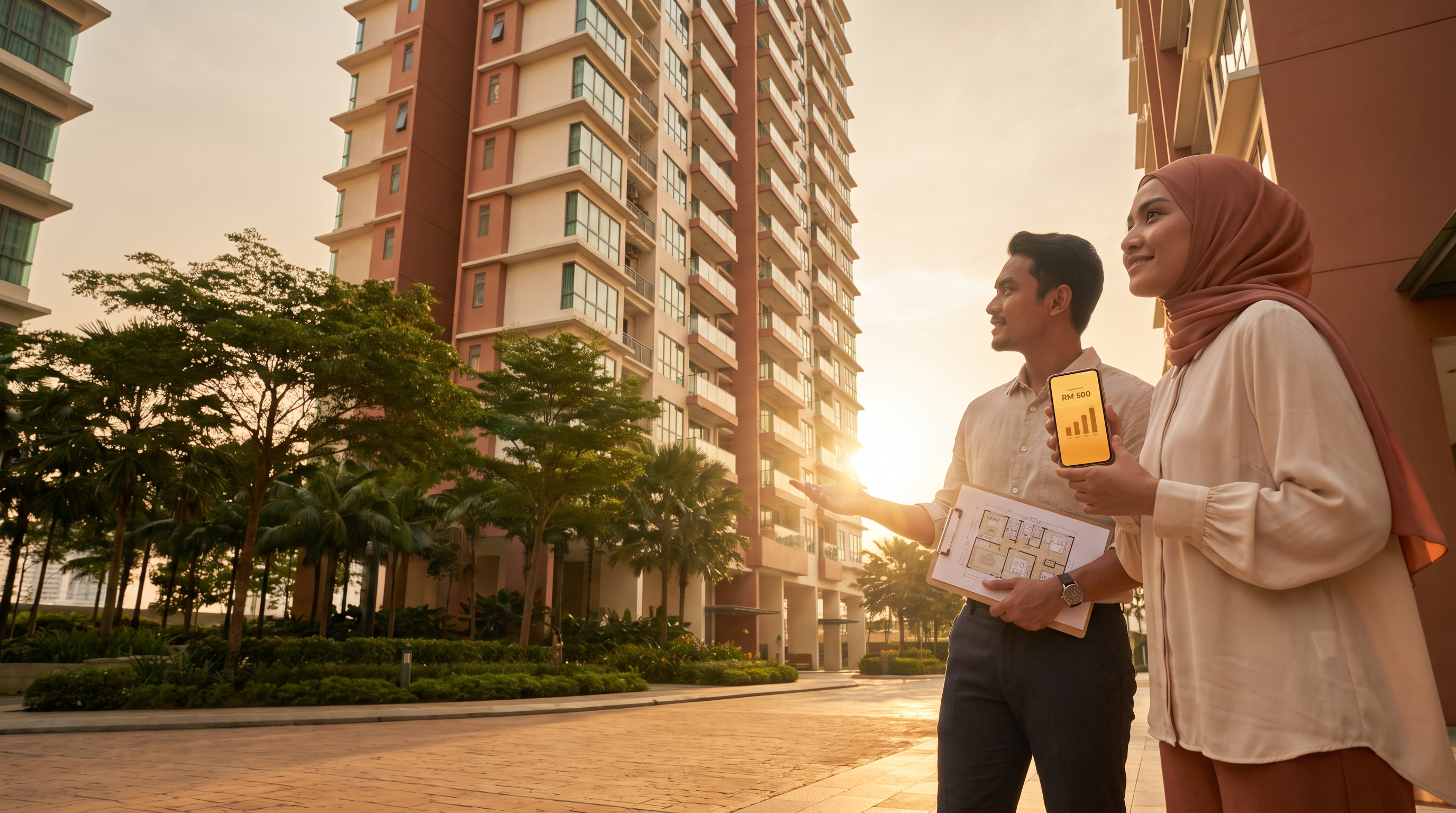
Wahed, the Abu Dhabi-headquartered Islamic fintech, has opened the first fractional real estate investment platform in Malaysia, and its first campaign closed faster than most Malaysian property launches: RM1.028 million from 928 investors in six days. The pilot deal, a residential unit at Southkey Mosaic in Johor Bahru, raised US$242,000 at an average commitment of roughly RM1,100 per investor, according to Digital News Asia. A second property, SkySuites KLCC, has since closed its fundraising, and the company says it will list at least eight more over the next 12 months.
The deal
Wahed X Sdn Bhd is a recognised market operator registered with the Securities Commission, and the platform operates inside the SC's inaugural Regulatory Sandbox, which allows participants roughly 12 months to test capital market products under direct regulatory oversight. Each property sits in its own limited liability partnership, a special purpose vehicle that buys the asset outright with no mortgage and no interest-bearing financing, which is what keeps the structure compliant with Shariah principles. Investors choose the specific property, review independent valuations and projected rental yields, and hold a fractional stake for roughly five years, collecting rental income quarterly and sharing in the sale proceeds. Unlike a REIT, nothing is pooled into a managed fund — the return is tied to the asset the investor selected.
The campaign mechanics are closer to a startup raise than a property listing. Per The Edge Malaysia, campaigns run 20 to 30 days, Wahed proceeds with an acquisition only after the full amount has been crowdfunded, and campaigns that miss their target are cancelled with investors refunded in full. The holding period is five to six years, with the focus on residential units priced between RM300,000 and RM600,000 at the lower end and RM1.2 million to RM3 million for higher-end assets. One disclosure gap remains open: as EdgeProp reported, the launch materials do not spell out the full portfolio composition or all cost layers, so the fee load on a RM500 ticket is still the open question.
Why this matters
Malaysia has never given retail investors clean, fractional access to a named residential property. A RM500 entry into a specific unit, with quarterly distributions and no mortgage, is a genuinely new asset class here rather than a repackaged institutional product. And 928 investors in six days is the market's answer on demand. But one pilot is not a track record, and Wahed's own target is eight successfully raised campaigns inside the sandbox window — that pipeline is what the SC will actually assess, not the headline from Johor Bahru.
The sandbox cohort matters more than any single platform in it. Six participants were selected on 26 November 2025 across three themes, and three have now been granted final approval and gone active from March 2026: Wahed X on fractional property, Kapital DX on trading tokenised securities, and Pitch Platforms on trading private shares. The other two live in secondary markets, which is precisely the missing piece in a five-year property hold — one of them may end up providing the exit route for the other. The competition on the real-estate theme is equally instructive: Urby, from Urban NX, takes entry as low as RM10 through profit-sharing contracts rather than ownership, had roughly RM1.5 million deployed across 19 properties as at January, and targets RM10 million by end-2026. Wahed charges five times the entry and sells actual fractional ownership. Policy is pointing the same way — Budget 2027 allocates RM270 million to draw private capital through equity crowdfunding and P2P platforms and extends the ECF and angel tax exemptions to 31 December 2030.
For Malaysian property firms and asset managers that want these rails in-house rather than licensed from a global platform, the build-versus-rent question is now concrete rather than hypothetical. The hard part is not the marketplace front end; it is the compliance layer, where sandbox-style disclosures, market operator reporting and SPV administration all have to hold up, and the valuation engine that has to justify a fractional price on a specific unit. That is custom platform work of the kind covered by the Selangor custom software track, and the yield-pricing and demand-matching layer is where the Selangor AI agency track comes in. A Malaysian platform does not have to be Shariah-only or sandbox-bound to be useful — the same mechanics work for any fractional or serviced-ownership product.
What's next
Three things to watch. Whether the pipeline of eight campaigns fills inside the sandbox period, which Wahed's own risk disclosure sets at 5 March 2026 to 5 March 2027. What the SC decides at the end of it — full licence or wind-down, with the disclosure explicitly reserving the right to require Wahed to cease the offering. And the fee and cost disclosure that EdgeProp flagged as missing from the launch materials, which is what determines whether a RM500 minimum is an accessible ticket or a rounding error.
Source: Digital News Asia — Wahed launches Malaysia's first fractional real estate platform
Editorial by The pitchdeck.my team
Need to build or automate your company? Custom development team as low as the price of an admin — enquire now.
pitchdeck.my's AI Your Business arm is a 15-year software house. We study your business, spec the fix, and let AI build it. Priced like a hire, not a project. ROI as fast as 30 days.
More news

Aonic raises US$10M Series A for Malaysia-built agri-drones
Subang Jaya drone maker Aonic closed a US$10M Series A led by Kairous Capital, handing the fund 7.9% of a business already earning over US$60M a year.

Senang.io raises RM880K via Leet Capital ECF, targets RM2M and a Series A
Kuala Lumpur insurtech Senang.io has raised RM880,254 via Leet Capital's equity crowdfunding offer, 88% of its RM999,207 minimum, as it positions for a Series A in 2026.