Phase 4 e-invoice grace extended to 2028, but RM10,000 rule still binds SaaS
LHDN's Phase 4 e-invoice mandate is in force from 1 January 2026, with full penalty enforcement now pushed to 1 January 2028. SaaS firms still face the RM10,000 rule and self-billed cross-border obligations.
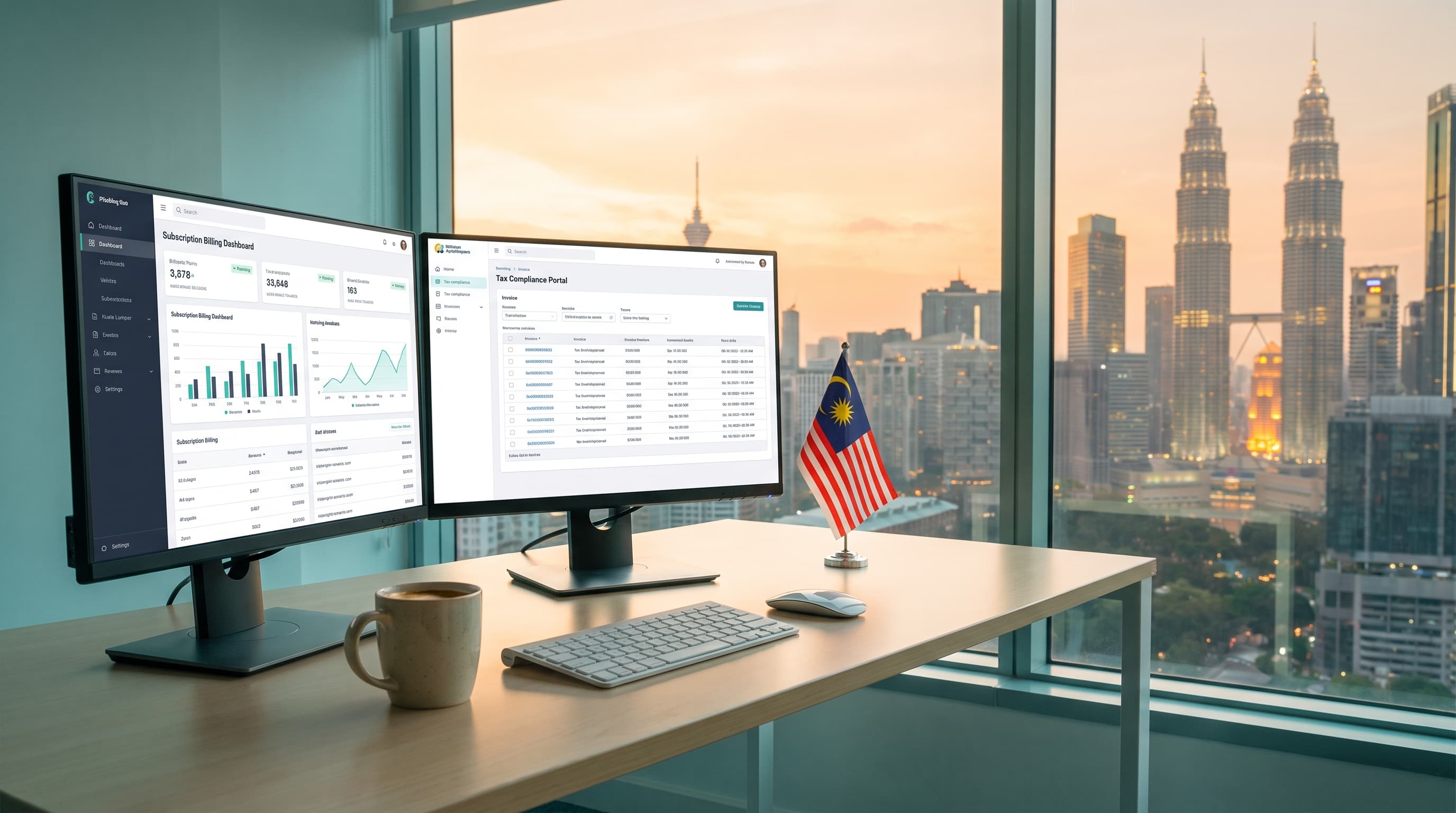
The Star reported on 21 April 2026 that Prime Minister Anwar Ibrahim has extended the penalty-free transition period for Phase 4 of Malaysia's mandatory e-invoice regime by a further twelve months, pushing full enforcement for mid-sized businesses from 1 January 2027 to 1 January 2028. Phase 4 — covering taxpayers with annual turnover or revenue between RM 1 million and RM 5 million — became mandatory on 1 January 2026, and the government has now stretched its interim relaxation window from twelve to twenty-four months. For SaaS providers sitting in this band, the headline is relief on penalties, but the underlying compliance obligation has not moved.
The deal
The e-invoice mandate, administered by the Inland Revenue Board (LHDN) through the MyInvois platform, has been rolled out in four phases since August 2024, starting with companies above RM 100 million in turnover and stepping down by revenue band. Phase 4 was always scheduled to come into force on 1 January 2026; what the 20 April 2026 announcement changed is the penalty-free grace period, which now runs from 1 January 2026 to 31 December 2027 rather than ending on 31 December 2026. Full penalty enforcement for Phase 4 will begin on 1 January 2028, the same date that new businesses started between 2023 and 2025 with current revenue of RM 1 million or more will also fall under the regime. Businesses below RM 1 million in annual turnover remain exempt, after the Cabinet approved raising the threshold from RM 500,000 to RM 1 million in December 2025 and cancelled the previously planned Phase 5.
The relaxation is not an amnesty. LHDN has made clear that businesses must still issue e-invoices through MyInvois from the mandatory start date, and the per-transaction penalty structure under Section 82C(1) of the Income Tax Act 1967 — fines of RM 200 to RM 20,000 per non-compliant invoice, plus up to six months' imprisonment — remains unchanged. During the extended grace period, Phase 4 businesses may continue to use consolidated monthly e-invoices with general descriptions, with one exception: any single transaction at or above RM 10,000 must be issued as its own individual, validated e-invoice immediately, with no consolidation allowed. LHDN published the updated terms as part of e-Invoice Specific Guideline Version 4.7 on 20 April 2026.
Why this matters
For SaaS companies, the e-invoice mandate cuts harder than it does for most industries. Subscription billing produces high transaction volumes, frequently in small amounts, and most providers either run on overseas billing platforms or sell across borders — both of which create additional MyInvois obligations. When a Malaysian customer buys a subscription from a foreign SaaS provider, the foreign supplier cannot issue a MyInvois-compliant invoice. The responsibility shifts to the buyer, which must self-bill: generate the e-invoice itself in the prescribed XML or JSON format, validate it through MyInvois, and submit it to LHDN on the supplier's behalf. That workflow has to run for every subscription cycle, including renewals, upgrades, and one-off professional services fees.
The RM 10,000 rule magnifies the problem at the top of the price band. A single annual enterprise contract above RM 10,000 — common in B2B SaaS — cannot be folded into a consolidated monthly e-invoice; it must stand on its own as a validated document. For SaaS firms selling multi-year, RM 50,000-plus contracts, that means running self-billed e-invoices on every deal close, and on every renewal, regardless of the grace period. Industry guidance now circulating in the Malaysian market puts the cost of integrating a SaaS billing platform with MyInvois at RM 5,000 to RM 25,000 for a standard middleware connection, RM 15,000 to RM 50,000 for a custom API build, and RM 50,000 to RM 150,000 for an enterprise ERP integration. For a Phase 4 SaaS company turning over RM 3 million, the integration cost is meaningful enough to be a budget line, not a rounding error.
The April 2026 package also widened the runway on penalty exposure but did not change the underlying economics. Process automation, validation middleware, and self-billed e-invoice workflows are still required to operate compliantly from 1 January 2026 onward; the additional twelve months buys SaaS operators time to roll those systems out without the RM 200-to-RM 20,000 per-invoice exposure that would otherwise have applied from 1 January 2027. The longer runway also aligns with the e-Invoice Special Voluntary Disclosure Programme, which runs from 7 July 2026 to 31 December 2027 and lets Phase 4 taxpayers correct missed or inaccurate submissions without the full penalty range.
What's next
The next hard date is 1 January 2028, when full penalty enforcement begins for Phase 4 businesses. LHDN has signalled that additional guidance on subscription billing patterns and self-billed e-invoices is likely before the 2027 close, particularly around the RM 10,000 threshold and the rules for consolidated low-value recurring charges. SaaS companies sitting in the RM 1 million to RM 5 million band should treat the extended grace as implementation runway, not optional compliance, and budget for integration work in their 2026 financial plan rather than waiting on the 2028 cliff.
Source: The Star
Editorial by The pitchdeck.my team
Need to build or automate your company? Custom development team as low as the price of an admin — enquire now.
pitchdeck.my's AI Your Business arm is a 15-year software house. We study your business, spec the fix, and let AI build it. Priced like a hire, not a project. ROI as fast as 30 days.
More news

Vorteil Capital Targets RM4 Million on pitchIN for SME Manufacturing Solutions
Selangor-based Vorteil Capital is raising a minimum RM4 million for 25% equity on pitchIN, offering RM500 shares to build out its manufacturing advisory and supplier network for SMEs.

MIDA's New EP Rules Set RM20,000 Floor for Foreign Hires
MIDA's revised Employment Pass framework raises the Category I minimum salary to RM20,000 with hard 10-year tenure caps and mandatory succession plans reshaping how early-stage firms hire foreign staff.