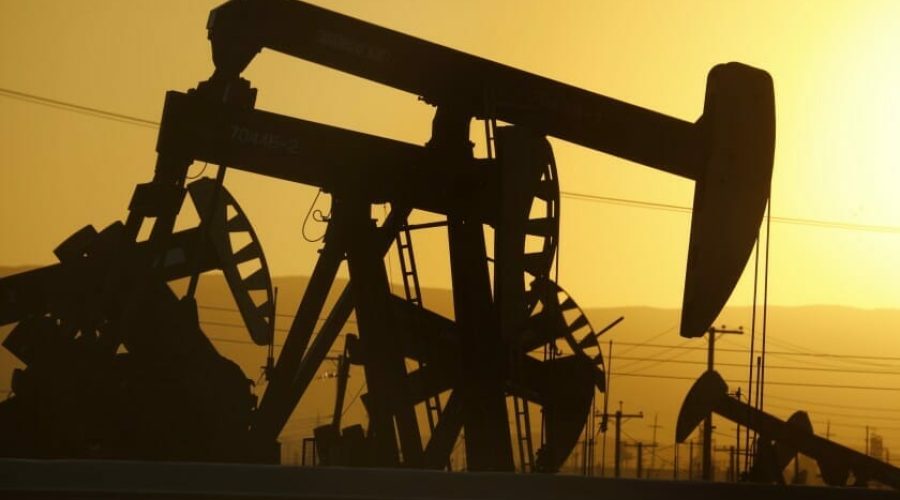
Oil Prices Plummet Amid Escalating US-China Trade Tensions
Amid escalating trade tensions between the US and China, oil prices dropped by over $1 per barrel on Tuesday, reaching their lowest levels in four years.
Brent crude futures fell by $1.39, or 2.16%, closing at $62.82 per barrel, and U.S. West Texas Intermediate (WTI) crude decreased by $1.12, or 1.85%, to $59.58. This marks a 16% drop since President Trump’s tariff announcement on April 2.
The U.S. is set to impose a 104% tariff on Chinese goods starting Wednesday, adding 50% more after China failed to lift its retaliatory tariffs by a deadline set by Trump.
Beijing has vowed to resist what it calls U.S. blackmail, intensifying fears of a global economic contraction. China’s Commerce Ministry declared it would fight to the end, further heightening concerns about declining energy demand and a potential recession.
Post-settlement trading saw U.S. crude futures dip further to $57.88, with U.S. stock indexes also sinking broadly. Analysts like Alex Hodes of StoneX noted that the situation presents a strong case for a global recession, which could lead to reduced energy consumption.
Goldman Sachs has forecast that Brent and WTI crude prices could reach $62 and $58 per barrel, respectively, by December 2025. However, under different scenarios, prices could fall to $55 and $51, respectively, by December 2026.
The U.S. administration has also indicated a preference for reducing crude prices to $50 or lower, viewing it as a top priority, according to J.P. Morgan’s Natasha Kaneva. This may involve disruptions similar to the 2014 price war between OPEC and shale, should it result in lower oil production costs.
In other developments, President Trump surprised many by announcing that the U.S. and Iran would begin nuclear talks in Oman, though Iran stated these discussions would be indirect. U.S. Energy Secretary Chris Wright warned that tighter sanctions could follow if Iran does not agree to abandon its nuclear programme.
Meanwhile, U.S. crude and distillate inventories decreased, while gasoline stocks rose, according to data from the American Petroleum Institute.
Crude stocks fell by 1.1 million barrels in the week ending April 4, gasoline inventories increased by 210,000 barrels, and distillate stocks fell by 1.8 million barrels. Official data from the Energy Information Administration is expected on Wednesday.